
DIOXIN FALLOUT IN THE GREAT LAKES
Where It Comes From; How to Prevent It; At What Cost
(SUMMARY)
Barry Commoner
Mark Cohen
Paul Woods Bartlett
Alan Dickar
Holger Eisl
Catherine Hill
Joyce Rosenthal
June 1996
CBNS
CENTER FOR THE BIOLOGY OF NATURAL SYSTEMS
QUEENS COLLEGE, CUNY, FLUSHING, NEW YORK
http://www.qc.edu/CBNS/dxnsum.html
This report summarizes work on a two-year project,
“Economically Constructive Conversion of the Sources Contributing to the
Chemical Pollution of the Great Lakes,” supported by The Joyce Foundation.
NOTE
This summary report describes the chief results of a two-year CBNS study of the origin
of dioxin entering the Great Lakes and the economic feasibility of preventing this
process. Full accounts of this work, including sources of data, methodology, the
detailed results, and references can be found in two reports:
“Quantitative Estimation of the Entry
of Dioxins, Furans and Hexachlorobenzene Into the Great Lakes
from Airborne and Waterborne Sources,” May 1995“Zeroing Out Dioxin in the Great Lakes:
Within Our Reach,” June 1996
These reports and additional copies of this
summary are available from:
Center for the Biology of Natural Systems (CBNS)
Queens College, CUNY
Flushing, NY 11367
Tel: 718-670-4180
Fax: 718-670-4189
http://www.qc.edu/CBNS/
TABLE OF CONTENTS
II. Dioxin Fallout on the Great Lakes
A. The Two Routes to the Lakes
B. How Much Dioxin Do the Sources Emit Into the Air?
C. Following Dioxin Through the Air
D. The Results: How Much Dioxin Reaches Each of the Great Lakes from Each of the
1329 Sources
E. Conclusion: What We Have Learned About Dioxin
Fallout
III. The Feasibility and Cost of Zeroing Out
Dioxin
A. The Strategic Approach
1. Pollution prevention
2. Dioxin and combustion
3. The economics of dioxin-free production technologies
B. Dioxin-free Alternatives to the Major Sources of Dioxin
1. Medical waste incinerators
2. Municipal solid waste incinerators
3. Pulp and paper mills
4. Iron sintering plants
5. Cement kilns that burn hazardous waste
IV. Conclusions: What We Can Do About the Great
Lakes’ Dioxin Problem — And The Nation’s
Back to CBNS New Reports
Return to CBNS Homepage: http://www.qc.edu/CBNS/
I. THE DIOXIN PROBLEM
In this age of environmental pollution, one group of chemicals stands out as the most perilous
toxic threat to the general population, and yet, thus far peculiarly resistant to effective remedial
action: dioxin. The threat is apparent from EPA’s September 1994 dioxin reassessment, which
concluded that:
- Our daily intake of dioxin and dioxin-like
chemicals creates a lifetime cancer risk in the general U.S. population
that is 500-1,000 times greater than the “acceptable”
one in a million risk. In pregnant women long-term damage to the
fetus may also occur close to this level of exposure, leading
to birth defects, disrupted sexual development, and damage to
the nervous and immune systems. By any reasonable standard, this means that we must
eliminate exposure to dioxin.
- Nearly all of the general population’s exposure to dioxin comes from food — two-thirds of it
from milk, dairy products and beef, major components of the diet. For their
part, milk cows and beef cattle absorb dioxin by eating dioxin-contaminated
feed crops. Since we cannot readily eliminate these foods, action must be taken to prevent
the contamination of the feed crops by dioxin. - Dioxin enters the environment chiefly in
the form of airborne emissions from incinerators, particularly
those that burn municipal and medical waste. The EPA dioxin reassessment
proposed, as a hypothesis, that once emitted, dioxin is carried
in the air to farms where it is deposited on the crops fed to
milk cows and beef cattle.Since
there is no way to shield crops from dioxin deposited on them
from the air, or to later remove it, action to prevent crop contamination
must be directed at the sources that produce dioxin, such as incinerators. - There are thousands of incinerators and
other sources of airborne dioxin in the United States and Canada
that vary considerably in the amount they emit and their distance
from farms that grow cattle feed crops. All
these numerous sources must therefore be identified and ranked
as to their impact on the crops, so that preventive action can
be appropriately targeted on the major sources.
These conclusions define what needs to be done
to eliminate — or at least sharply reduce — the dioxin threat:
Dioxin must be traced from each of the thousands of sources, through
the atmosphere (where its fate will be affected by wind, temperature,
sunlight and precipitation) to its deposition on cattle feed crops
(where the crop’s growth stage will influence how much dioxin
is absorbed) and to the cattle (which will accumulate dioxin in
milk and beef). Then, by ranking each source’s contribution to
cattle’s exposure to dioxin, remedial action can be focused on
the major ones. This amounts to an ecosystem approach to
environmental policy; it tracks dioxin through the successive
ecological sectors that comprise the food chain, defining its
impact on the people who depend on it.
This approach is very different from current
practice, which only considers the dioxin risk from an individual
source on the relatively few people near it. For a long time,
such risk estimates have assumed that exposure results from inhaling
dioxin-contaminated air or, in the case of infants, from eating
soil or household dust that contains deposited dioxin. A typical
assessment worked out the maximum cancer risk, over a 70-year
lifetime, to a person breathing dioxin-contaminated air at a point
downwind of an incinerator where the ground-level concentration
of dioxin is greatest — a region no more than a few miles away.
Calculated in this way, the cancer risk from a modern trash-burning
incinerator is generally at or close to the “acceptable”
one per million limit, or perhaps 10-20 times above it. This is
a maximum risk; for people living farther away from the
incinerator — as most of them do — the risk from that source
will be much lower.
Recently, for example in the dioxin regulations
for hazardous waste incinerators proposed in April 1996, EPA risk
assessments have recognized that nearly all of the exposure is
through food, but once again, only the risk to the most exposed
individual is estimated. This leads EPA to the notion that
a farmer, living near an incinerator and eating home-grown beef
(milk and dairy products are not mentioned), is at the greatest
risk from dioxin incinerator emissions — not a very helpful guideline
for urban residents or indeed for most of the U.S. population.
We now know that these kinds of assessments
greatly underestimate the actual cancer risk from incinerator
dioxin emissions. The country’s incinerators affect not only the
nearby people, but, much more powerfully, through their food supply,
the entire population. The incinerators’ health impact is not
created one by one, but collectively, for each one contributes
to the widespread dioxin fallout that, channeled through the air,
the crops, and the cattle, contaminates everyone’s food supply.
This is the painful lesson that ecology teaches: the danger of
dioxin is vastly greater than the incinerator risk assessments
have led us to believe; it threatens the entire population with
an unacceptable risk of cancer and grave hazards to fetal development.
An early, outstanding example of the ecosystem
approach is the effort to remedy the toxic pollution of the Great
Lakes. In recent years, this has focused on the impact of persistent
toxic chemicals, including dioxin and dioxin-like compounds (such
as certain PCBs), that, entering the lakes, pass through the lake-based
food chain and accumulate in fish, wildlife, and people. Since
1909, the environmental future of the Great Lakes has been the
responsibility of a pioneering effort in international ecological
collaboration. Mandated by a series of U.S.-Canadian treaties,
the International Joint Commission (IJC) has evaluated detailed
studies of the lakes’ ecological status and has proposed ways
of improving it.
The IJC has concluded that only the strategy
of pollution prevention can end the toxic threat to the
Great Lakes. Present efforts to remedy the environmental impact
of toxic pollutants — including the most recently proposed EPA
regulations of incinerator emissions — are almost entirely based
on the strategy of control: a device is appended to the
source with the aim of recapturing enough of the pollutant to
bring the environmental emissions to some presumably acceptable
level. The IJC strategy calls for a different approach. Since
the goal of prevention is to completely eliminate the pollutant
— which experience shows is unattainable through control devices
— this must be achieved by transforming the process that actually
generates the pollutant so that it is not produced to begin with.
This can be done, for example, by recycling municipal waste instead
of burning it.
There are several basic ways to study a toxic
pollutant like dioxin. To gauge its impact on the environment
and human health, we need to ask how much of it gets into ecosystems
like those that support the Great Lakes or cattle farms. Then,
to do something about it, we need to ask where the dioxin comes
from, and — since so many sources are involved — which ones
are the most important to change or shut down, so that their emissions
can be reduced to zero and the problem thereby prevented.
Finally, we also need to ask how dioxin gets from the places where
it is produced — chiefly incinerators — to the Great Lakes,
cattle farms, or for that matter to anyplace that will suffer
from its toxic effects.
In August 1993, CBNS began a two-year project
on the Great Lakes, supported by The Joyce Foundation, to answer
these questions and an additional one fundamental to the IJC program
of preventing dioxin pollution: What will it cost, in jobs and
economic impact, to prevent the major sources of dioxin from producing
it? To answer these questions we carried out a study directed
toward the following goals:
- Identification and characterization of
all the sources of airborne dioxin in the United States and Canada
with respect to location and estimated rate of dioxin emission. - Development of a method for quantitatively
tracking the movement of dioxin, from emission at each of the
thousands of sources, through the air, to the Great Lakes, so
that the sources can be ranked as to the amount they deposit in
each of the lakes, and the major sources can be identified for
preventive action. - Finally, since pollution prevention involves
an investment in new or altered dioxin-free facilities, evaluation
of the technical and economic feasibility of making such changes.
The results of our study are outlined in this
summary. They show that once emitted by the numerous sources,
dioxin travels in the air over thousands of miles, creating a
toxic fallout that settles out everywhere, contaminating not only
the Great Lakes, water, fish and wildlife, but the farms where
cattle are raised to produce milk, dairy products and beef as
well. In a way, our study confirms the EPA source/atmosphere/cattle
hypothesis of dioxin exposure — but extends it to every cattle
farm in the United States and Canada — and confirms the reality
of the grave threat that we face from the dioxin that contaminates
the food supply. Our study also shows that the major sources of
the dioxin deposited in the Great Lakes, in particular the incinerators
that burn municipal or medical waste, can be replaced by dioxin-free
waste-disposal procedures with little or no loss in economic activity
or jobs — and even with possible gains.
II. DIOXIN FALLOUT ON THE GREAT LAKES
A. The Two Routes to the Lakes:
Dioxin can get into the Great Lakes by water
as well as by air. The water route brings dioxin into the lakes
from pulp and paper mills, sewage treatment plants and chemical
plants that pipe their dioxin-contaminated wastewater directly
into the lakes or the streams that flow into them. Direct measurements
of the dioxin content of the wastewater and the rate at which
it flows into the lakes can tell us how much dioxin they receive
annually — the “loading” from each source. Waterborne
dioxin can also enter the lakes in leachate from nearby toxic
dumps, but the amounts are difficult to measure. Estimation of
the waterborne dioxin is particularly difficult in Lake Ontario
and Lake Erie. These lakes are burdened by dioxin leaching from
nearby toxic dumps and dioxin-laden sediments resulting from earlier,
heavily-contaminated waste water from chemical plants and pulp
and paper mills. In the other lakes, waterborne dioxin is relatively
small, about four to seven times less than the amount that enters
from the air.
While the link between the waterborne sources
of dioxin and the lakes is direct and relatively simple, this
is not true of the airborne sources. There are few actual measurements
of the amounts of dioxin emitted by the thousands of airborne
sources; yet, from these limited data we must estimate the amounts
emitted by each of them. Then, the passage of the dioxin
between each source and the lakes — which determines how much
of the emitted dioxin remains to be deposited when it finally
reaches the lakes — is far from simple or direct. The fraction
of the emitted dioxin that arrives over the lakes depends on how
it moves with the winds; how fast it spreads by diffusion; and
how much is destroyed or carried to the ground en route. Yet,
however complex, all this must be worked out if we are to understand
the origin of the dioxin burden on the Great Lakes — and eventually
of the dioxin that contaminates the country’s supplies of milk,
dairy products and beef.
B. How Much Dioxin Do the Sources Emit into the Air?
Dioxin has been found in the emissions from
many processes: incinerators that burn municipal, medical, hazardous
chemical waste, or sewage sludge; copper smelters; wood- and coal-burning
furnaces; iron sintering plants (which prepare iron ore and steel
plant residues for use in blast furnaces); heavy duty diesel vehicles;
gasoline-driven cars and trucks. The amounts of dioxin that these
different sources produce vary a great deal; but what they all
have in common is combustion — fuel is burned — and the
presence of chlorine in the fuel. Trash-burning incinerators have
been studied most, and we now know that they literally synthesize
dioxin by chemical reactions as combustion gases cool down in
their control devices or exhaust stacks. There, chlorine (released,
for example, from the burning of chlorinated plastics) and organic
(carbon-containing) molecules that survive combustion combine
to produce dioxin.
The effort to estimate how much dioxin falls
on the Great Lakes must begin with basic information about the
sources — in particular, their location and how much dioxin they
emit per day. Ideally this should be done by continuously measuring
the amount of dioxin flowing through the stack, as is done with
simpler pollutants such as carbon monoxide. Unfortunately, this
ideal is thus far unattainable with dioxin. Instead, a sample
of the stack gas must be trapped and sent to a laboratory for
an elaborate and expensive (about $1000 per sample) analysis.
Very few of the many sources have ever been analyzed for dioxin,
and even those are tested only infrequently.
The EPA and other environmental agencies have
used the “emission-factor” approach to get around this
problem. Measurements are made at a few — hopefully typical —
trash-burning incinerators, let us say, recording not only the
amount of dioxin emitted from the stacks, under standard (again
hopefully) operating conditions, but also connecting that amount
to the amount of trash burned. An emission factor — the amount
of dioxin emitted per ton of trash burned — can then be
calculated. Finally the amount of dioxin emitted by an untested
incinerator can be estimated by multiplying the amount of waste
it burns (the “throughput”) by the appropriate emission
factor.
There are difficulties with this approach,
for the amount of dioxin emitted depends, not only on the amount
of material burned, but on a number of other factors as well,
including: the nature of the fuel (especially its chlorine content);
the design of the incinerator; and the type of emission control
device. The largest — and often unknown — variable is the nature
of the fuel. For example, two measurements of dioxin emissions
from a Columbus, Ohio municipal waste incinerator (now closed)
differed by a factor of five, apparently because of a difference
in the composition of the trash burned on the two occasions.
Another, even more basic, difficulty is that
the number of certain sources that are actually operating
may be unknown. For example, in 1993, when the EPA analysis was
made, there was no comprehensive national inventory of medical
waste incinerators that listed them by location and throughput.
(In contrast, this information was available for trash-burning
and hazardous waste incinerators.) In that analysis, and in our
own, it was necessary to make a very approximate estimate of the
amount of medical waste burned. EPA used permit data from 20 states
on individual hospital incinerators to estimate the average amount
of medical waste incinerated per capita. This average was applied
to other states, based on their population. Since most of the
incinerator locations were unknown, for the purpose of our computer
analysis the best that could be done was to assign the amount
of waste burned to a geographical area such as a state or a large
city, based on its population.
Taking such difficulties into account as much
as possible, EPA estimated the emission factors of a number of
dioxin sources for the 1994 dioxin reassessment. In our Great
Lakes study, we brought the EPA data up to date and improved on
them somewhat. The range of uncertainty in the emission factors
is nevertheless quite large; most of them vary over a 10-fold
range or more.
In this way, the emission factors for the various
types of sources, their location, and their respective throughput
(for example, the number of tons of trash burned by an incinerator,
or the amount of fuel used by diesel trucks) were tabulated. We
created a database of 1329 sources, of which 954 were individual
facilities at specified locations and 375 were aggregated for
entire states, provinces or metropolitan areas. We computed the
amount of dioxin that each of the various sources emitted into
the air from the product of the emission factor and the throughput.
Based on average emission factors, this showed that, as of 1993,
medical waste incinerators accounted for 53% of the total national
dioxin emissions, and municipal waste incinerators for 24%, with
about 20% produced by the next five combustion sources (cement
kilns burning hazardous waste, secondary copper smelters, wood-burning,
iron sintering and coal burning), and the remaining three percent
distributed among seven minor sources. Since 1993 this situation
has changed considerably; for example, a number of medical waste
incinerators have been shut down.
C. Following Dioxin Through the Air:
The amount of dioxin that reaches the Great
Lakes — or, for that matter, any other ecological target — depends
on the amount that the sources emit into the air and how much
of that is lost (destroyed or deposited) in transit or goes somewhere
else. As soon as the dioxin leaves the source, some of it, chiefly
attached to relatively large particles, settles out on the ground
nearby. Only about 1-10% of the emitted dioxin is deposited within
30 miles of the source. The rest, in the form of small particles
and vapor, moves with the wind and spreads over an ever-increasing
area. Meanwhile, subject to gravity, the vertical movement of
the air, diffusion, and precipitation, some of the dioxin falls
to the ground, reducing the amount that is still airborne and
able to reach the Great Lakes. At the same time, there are destructive
processes at work: sunlight can destroy dioxin depending on whether
it is in the form of vapor and therefore exposed to the ultraviolet
radiation, or attached to solid particles, and thereby to some
degree shielded from it. What is more, whether the dioxin is attached
to protective particles or in the form of vapor depends on the
temperature; there is a higher proportion of vapor in warm air.
Finally, when the dioxin reaches one of the lakes, the amount
that comes down depends on the local weather conditions at the
time. Rain or snow will carry dioxin quickly to the lake surface.
Fortunately, there is a way to trace dioxin
through this complex web. A basic method for tracking certain
airborne pollutants was worked out by the National Oceanic and
Atmospheric Administration (NOAA) in response to the need to trace
the movement of radioactive material — for example, from a nuclear
accident — in time to warn people who might be exposed to it.
NOAA has developed a computer model (called HYSPLIT, after Hybrid
Single Particle Lagrangian Integrated Trajectory). It incorporates
detailed weather data for the United States, southern Canada and
northern Mexico for a grid of 924 points 183 km apart at six levels
up to 3,000 meters, recorded at two-hour intervals for every year
since 1988. The computer model starts with a “puff,”
containing a fixed amount of material, emitted at set intervals
into the air from a source at a known geographical location. It
then tracks each puff as it spreads, moves with the weather, and
the material in it is destroyed in transit, or is deposited. Dr.
Mark Cohen of the CBNS staff has modified HYSPLIT to incorporate
the behavior of the 17 molecular forms of toxic dioxins and furans
and eight additional non-toxic groups, in particular with respect
to their distribution between the vapor and particulate-bound
phases.
The modified HYSPLIT/TRANSCO model is capable
of estimating the amount of a specified dioxin congener emitted
by a source located at any point in the United States and Canada
that is deposited at any other point or area — in this case,
the area of each of the Great Lakes. In a typical computer run,
the model tracks the movement of a series of 1251 puffs emitted
from the source at regular intervals over a one-year period. It
computes the position of each of these puffs and the amount of
the dioxin congener it contains, at hourly intervals over the
entire year (1993). The model finally estimates the amount of
the congener emitted from the source that is deposited over the
area of each of the Great Lakes. We can then compute each source’s
“air transfer coefficient” (ATC) — that is, the fraction
(or percent) of its emitted dioxin that is deposited in each of
the lakes.
In order to reduce the computation time needed
to estimate the ATC values for each of the 1329 sources and all
of the 25 different dioxin congeners, two interpolation procedures
were developed and validated. One of these used the ATC values
generated for 28 evenly distributed standard source locations
to generate interpolated values for all 1329 sources. Another,
based on computer runs on four different congeners at each of
the standard source locations, generated ATC values for all 28
congeners from the relationship between the ATC values of the
four separate congeners and their physical-chemical characteristics.
How well does the computer model do this job?
To answer this question we compared actual two-day measurements
of the dioxin concentration of ground-level air made by the Ontario
Ministry of Environment and Energy at Dorset, Ontario, Canada
(in a rural area) at monthly intervals during 1993 with the total
concentrations predicted by the computer model at that location
arising from the emissions from all 1329 sources. There was a
general agreement, with some departures, between the monthly measurements
and the model’s weekly predictions. But the predicted and measured
yearly average values were very close: 3.4×10⁻¹⁵ g
of dioxin (TEQ) per cubic meter and 3.3×10⁻¹⁵ g of
dioxin (TEQ) per cubic meter respectively. However, this agreement
is based on only the single set of measurements suitable for comparison
that was available at the time and needs to be confirmed by further
comparisons.
The agreement between the predicted and measured
deposition of dioxin leads to another important conclusion: It
indicates that the amount of dioxin (as TEQ) in the air at Dorset
can be accounted for by the emissions from our inventory of sources
— suggesting that no other major sources are involved. For another
airborne pollutant, hexachlorobenzene (HCB), that we also studied,
the story was quite different. The computer-predicted values for
several Canadian monitoring sites were only about one-tenth of
the actual measured values. Apart from uncertainty in HCB emissions,
this suggests that most of the HCB found at those sites must have
come from sources other than those included in our inventory.
HCB is much longer-lived in the atmosphere than dioxin and is
more likely to be distributed globally, occurring for example
in the Arctic, very far from any sources. Apparently, unlike dioxin,
most of the HCB deposited in the Great Lakes region is part of
the common global pool to which the U.S. and Canadian sources
contribute only a part.
D. The Results: How Much Dioxin Reaches
Each of the Great Lakes From Each of the 1329 Sources:
Using the computer model, we were able to estimate
the amount of dioxin, from each of the 1329 sources, that was
deposited in each of the Great Lakes. Analysis of this mass of
data yielded some very useful information.
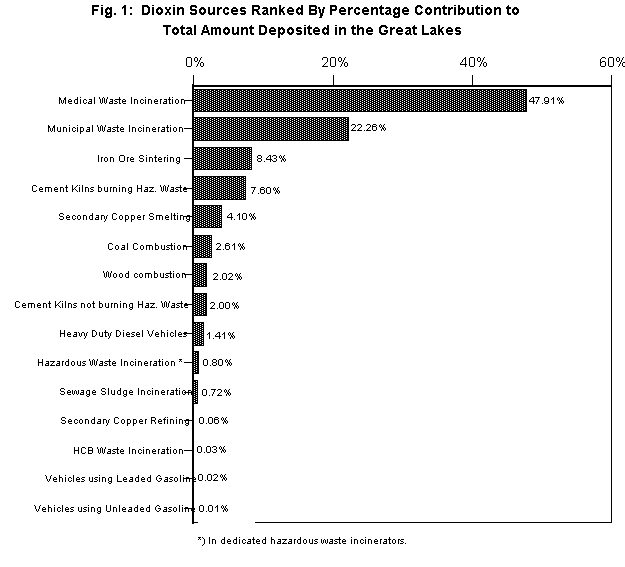
- Incineration of medical and municipal waste
is responsible for the largest percentages of the total amount
of dioxin deposited in the Great Lakes — 48% and 22%, respectively.
Iron ore sintering and cement kilns burning hazardous waste contribute
an additional 8% each. The remaining 14% is distributed among
11 additional types of sources (see Figure 1).
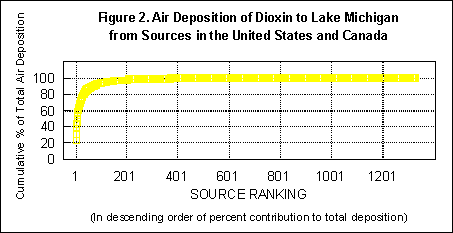
- Relatively few of the individual sources
account for most of the dioxin deposited in the Great Lakes. As
Figure 2 shows, when all of the 1329 sources are ranked as to
the amounts they contribute, and the cumulative amount deposited
in Lake Michigan is plotted against their descending rank, it
can be seen that the 10 highest-ranking sources alone account
for 60% of the total amount deposited. In all, only 106 sources,
or 8% of the total, account for 85%of the dioxin deposited in
the Great Lakes. Eliminating these relatively few sources would
go a long way toward ending the deposition of airborne dioxin
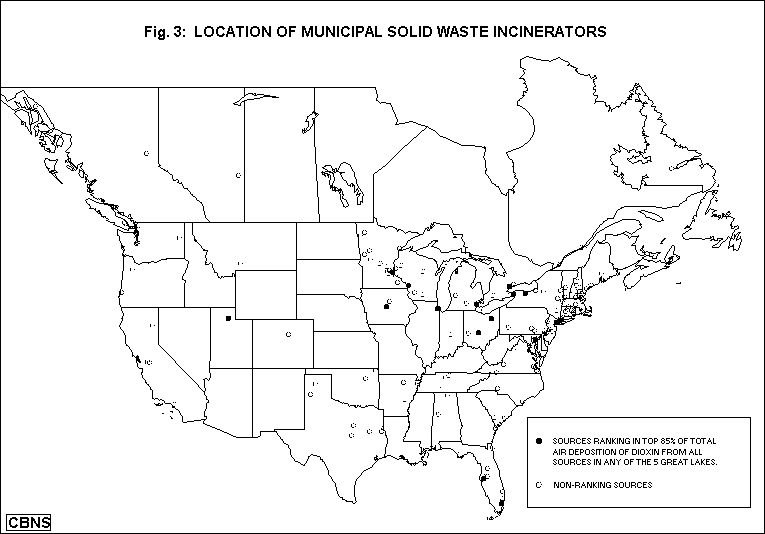
in the Great Lakes. - When the sources are mapped and classified
as to whether or not they rank in the top 85% of the sources contributing
to the airborne dioxin entering the Great Lakes, it can be seen
that sources around the Great Lakes are responsible for a good
deal of the total deposition of dioxin, but the top contributors
also include sources as far away as Florida. An example is shown
in Figure 3: a map of municipal solid waste incinerator locations,
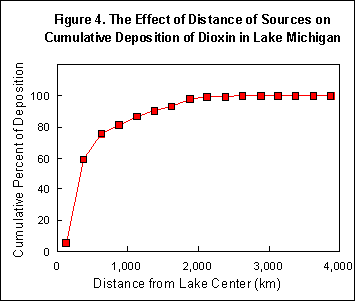
indicating those that contribute to the top 85% of dioxin deposition. - When the contributions of all the sources
are ranked by their distance from the center of each lake, it
is evident that about half of the cumulative dioxin deposition
comes from sources about 300 miles (480 kilometers) or less from
the center of the lake — that is, located in the U.S. states
and the province of Ontario that border the lakes. The remaining
half of the total deposition comes from sources as far as 1,500
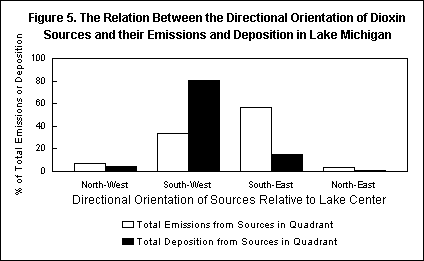
miles (2,400 kilometers) away (see Figure 4). - The extent to which the different sources
contribute to the dioxin deposited in the Great Lakes depends
not only on the amounts they emit and their distances from the
lakes, but also on their geographic location. A higher percentage
of the dioxin emitted from sources to the south and west of the
lakes is deposited in them than from the sources to the north
and east. Figure 5 illustrates this effect in the case of Lake
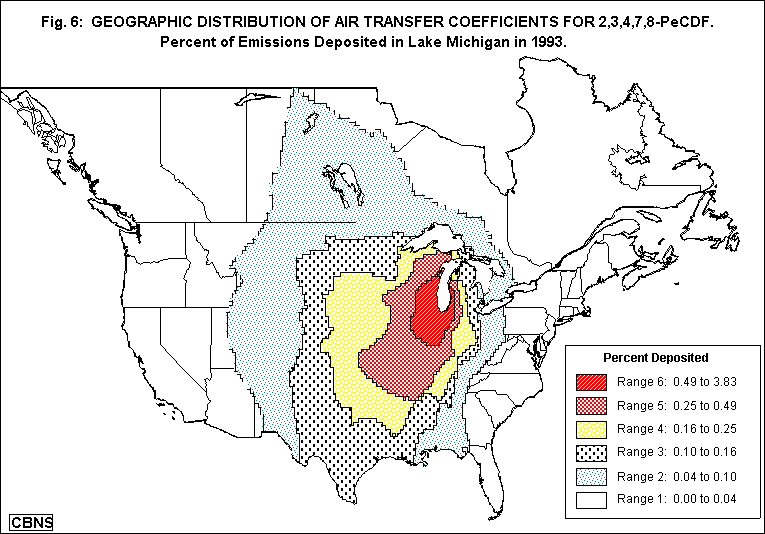
Michigan. - The effect of the sources’ geographic location
on dioxin deposited in the Great Lakes reflects the weather pattern.
This is visualized in Figure 6, again with Lake Michigan as the
example. For this purpose the entire U.S./Southern Canada area
was divided into 20,000 squares (each 270 square miles in area),
and the computer program estimated the ATC value for a dioxin
congener (2,3,4,7,8-pentachloro-dibenzofuran) emitted at each
of the squares’ center points and, after air transport, deposited
in the lake. Thus, for each square we estimated the percent of dioxin emitted at
its center point that would be deposited in Lake Michigan. Figure
6 maps the geographic distribution of six successive ranges of
ATC values. It shows that air transport is most efficient for
sources to the west and southwest of Lake Michigan and least efficient
for sources to the northeast and southeast of the lake. This reflects
the general southwest-to-northeast and west-to-east weather pattern.
E. Conclusion: What We Have Learned About
Dioxin Fallout:
We have learned a number of things that we
did not know before, not only about dioxin in the Great Lakes,
but also what still needs to be done in order to understand how
dioxin contaminates the food supply and what can be done to prevent
it. For example, now that we know that a significant amount of
the dioxin emitted by trash-burning incinerators and hazardous
waste-burning cement kilns as far away as Florida and Texas reaches
the Great Lakes, we also know that dioxin fell to the ground everywhere
in between — reaching thousands of dairy farms as well. Thus,
we now know that the environmental process that links incinerators
to the nation’s milk supply is not merely a hypothesis about a
local phenomenon, but the path that dioxin actually follows even
over long distances. And now that we know from the computer model
how to identify, among the thousands of sources, the relatively
few that are responsible for depositing most of the dioxin in
the Great Lakes, the same could be done for the dairy farms —
leading to plans for protecting them. (A CBNS study of the amounts
of dioxin deposited on dairy farms in Wisconsin and Vermont, and
the amounts in their feed crops and milk, is underway.)
This new knowledge has important implications
for environmental policy. When– as it is now — the wisdom of
building a trash-burning incinerator is based on the health hazards
experienced only in the nearby area, the public policy issues
come down to a straight-forward question: Should the community
build an incinerator that would expose the people of the community,
themselves, to this hazard? Since, in this case, the risk would
be self-imposed, the community at risk, through its elected officials,
could decide whether or not to accept it.
Now we know that, in fact, the dioxin generated
by any one incinerator is combined with dioxin from many other
sources, and that their collective impact is visited upon people
everywhere — whether or not they chose to build an incinerator
— through food produced on distant farms. This means, for example,
that the risk to the people of Chicago is not so much from inhaling
dioxin emitted by the city’s trash-burning incinerator, but rather
from ingesting milk and cheese produced on farms, for example,
in Wisconsin. Moreover, these foods are likely to be contaminated
not only by emissions from the Chicago incinerator, but also by
emissions from incinerators in Wisconsin, the surrounding states,
and states as far away as Florida.
Now the policy debate must be greatly broadened.
While the people of Chicago would of course benefit by persuading
the city officials to shut the local incinerators in favor of
dioxin-free alternatives such as recycling, to really solve the
problem the same remedial action would need to be taken in the
nearby states, and even in more distant ones. Since the environmental
impact of any one incinerator is part of the collective impact
of many of them, action to reduce the hazard must be collective
as well; the policy issue is no longer local, or even regional,
but national.
We have also learned more about the dioxin
“background” problem. This goes back to claims made
some 20 years ago in reports from the Dow Chemical Company that
dioxin occurs throughout the environment because it is created
by widespread natural processes such as forest fires, and not
by industrial processes and products. That idea was laid to rest
when studies of dated lake sediments showed that almost no dioxin
was present until the 1940s, and then rose sharply in parallel
with the use of chlorine by the petrochemical industry. Nevertheless,
in some quarters the idea persists that the widespread occurrence
of background levels of dioxin is an unavoidable situation that
we have to live with. And it is sometimes argued that since the
output of dioxin from any one source does not add significantly
to the background level, it can be “safely” operated.
We now know that the chief contribution of each source to the
hazard of airborne dioxin is, in fact, made by adding to the general
level of background dioxin — the widespread fallout — and that
this dangerous impact on the food supply is not “natural”
but man-made.
Another useful outcome of our study has been
the identification of serious gaps and inadequacies in the basic
information about airborne emissions of dioxin. Only an extremely
small fraction of the operating incinerators and other sources
have ever been tested for dioxin emissions, forcing reliance on
emission factors, which are themselves uncertain. In the case
of one major source of dioxin deposition to the Great Lakes —
iron sintering plants — there are at this time no actual measurements
from U.S. or Canadian facilities. In sum, there is a particularly
urgent need for more and better information about the sources
of airborne dioxin.
III. THE FEASIBILITY AND COST OF ZEROING
OUT DIOXIN
A. The Strategic Approach:
1. Pollution prevention:
In developing a strategy to stop dioxin fallout
in the Great Lakes, we have been guided by the principle of pollution
prevention. Although pollution prevention has become a popular
environmental buzzword in the last few years — and has even acquired
a high-tech shorthand, “P2” — its practical, operational
meaning is often unclear. The clearest way to define pollution
prevention is in comparison with its opposite: pollution control.
In pollution control, the source that generates the pollutant
remains unchanged, but a separate control device is attached to
trap or destroy the pollutant before it escapes into the environment.
The source continues to produce the pollutant, but now
a lesser amount — which is never zero — reaches the environment.
Unlike pollution control, prevention calls
for changing the technology of the production process in
which the pollutant originates, so that the source no longer produces
it at all. Automatically, emissions are then zero.
In our first year’s work we identified four
classes of airborne sources (medical waste incinerators, municipal
waste incinerators, cement kilns that burn hazardous waste, and
iron sintering plants) that together account for more than 85%
of the airborne dioxin deposited in the Great Lakes. We have chosen
these sources and one waterborne source (pulp and paper mills)
for analysis of economically constructive ways of eliminating
their production of dioxin. For each source class, we have aimed
to:
- identify the appropriate changes in production
technology that prevent dioxin formation; - estimate the cost of substituting them
for the existing dioxin-generating technologies; - evaluate the impact on the regional economy.
2. Dioxin and combustion:
All of the sources that emit airborne dioxin
are combustion processes, in which a carbon-containing fuel is
burned in the presence of oxygen, generating heat. The fuel may
be natural gas, oil, coal, or wood (as in a furnace); a mixture
of paper, plastic, food scraps, old clothes, and much else (as
in a trash-burning incinerator); coke and coal dust (as in an
iron sintering plant); or a mixture of toxic organic — that is,
carbon-containing — chemicals (as in a cement kiln burning hazardous
waste). No matter what it is made of, when it is burned, the fuel
reacts with oxygen and is chemically changed; its original molecular
structure is destroyed. Dioxin, which is, after all, an organic
compound, will also burn and thereby be destroyed, if the flame
is hot enough. In practice, combustion is never 100% efficient;
some fraction — which may be very small– of the original organic
fuel will survive.
Most of what we know about the relation between
combustion and dioxin comes from studies of trash-burning incinerators.
When it was first detected in incinerator emissions, it was assumed
that the dioxin, having been present in the trash to begin with,
had simply survived destruction in the furnace. Incinerator manufacturers
claimed that a well-run incinerator would destroy all of
the dioxin in the trash and that its presence in emissions was
only a sign that the furnace was not hot enough or otherwise malfunctioning.
However, a CBNS analysis showed that the amounts of dioxin emitted
by different incinerators was not related to their operating temperatures.
In 1984, seeking a better explanation, we suggested the possibility
that in the cooler parts of the incinerator, surviving fragments
of chlorine-free organic compounds in the fuel might combine with
chlorine (which is released, for example, when chlorine-containing
plastics burn) and produce newly formed dioxin. Within a year
this idea was tested in a Canadian incinerator. Dioxin was measured
in the fuel (trash), the hot gas leaving the furnace, and the
relatively cool gas at the base of the stack. The amount of dioxin
at the base of the stack was 100 times the amount leaving the
furnace, and much more than the amount in the fuel. We now know
that a trash-burning incinerator produces dioxin; whenever
the incinerator operates, the world has more dioxin than it had
before.
Exactly how dioxin is synthesized in
incinerators is not yet known. What is known is that chlorine
is essential; if the fuel contained absolutely no chlorine, no
matter what else happened in combustion, no dioxin could be formed.
Generally, the more chlorine in the fuel, the more dioxin is produced,
although other factors may have an influence as well. It also
appears that in the form of ordinary salt — sodium chloride —
chlorine is much less effective in dioxin synthesis than it is
when released from an organic substance, such as chlorinated plastic,
during combustion. Chloride salts are widely distributed in nature,
for example in the oceans, and every living thing. If dioxin could
be readily synthesized from chloride, it would be produced in
natural processes, for example in forest fires. But this is contradicted
by the basic fact that before the 1940s there was little or no
dioxin in the environment. The rapid rise in environmental dioxin
since then coincides with the increase in the amount of chlorinated
organic chemicals produced by the petrochemical industry — which
has thereby created the problem of environmental dioxin.
3. The economics of dioxin-free production technologies:
Since economics is an essential part of environmental
policy, it is important to define the targets — in our case the
sources of dioxin — in economic terms. What these sources —
incinerators that burn municipal or medical waste, cement kilns
that burn hazardous waste, iron sintering plants, pulp and paper
mills — do economically is to produce goods or services. They
cause environmental problems because the same production process
that produces the good or service also produces the pollutant,
dioxin, as well. In the pulp mill, the chlorine process produces
both bleached pulp and dioxin; in the incinerator, the
same furnace that disposes of trash also sets up the chemical
reactions that produce dioxin. Pollution prevention is aimed at
breaking this link between the economic good and the environmental
pollutant, by changing the technology of production so that it
produces the good without generating the pollutant —
automatically achieving zero discharge. For
example, by recycling instead of burning it, trash is still disposed
of, but no dioxin is produced.
Thus, pollution prevention is not a purely
“environmental” proposition, but a matter of revising
and improving the production process itself. In this sense, except
that its motivation is environmental rather than purely economic,
pollution prevention is not fundamentally different from a well-established
economic process: investing capital to modernize production technologies
in order to improve their economic productivity and/or the quality
of the products. In the pollution prevention strategy, protecting
the environment becomes a decisive goal of investment. And once
pollution prevention is seen as an investment in the production
process, the importance of evaluating its economic feasibility
is self-evident.
For this purpose, we have estimated the changes
in the overall cost of producing the sources’ goods or services
that would occur if the existing dioxin-generating production
processes in the Great Lakes region were replaced by dioxin-free
processes. For example, we were interested in estimating the change
in the cost of operating a regional community’s residential waste
disposal system that would occur if its trash-burning incinerator
is replaced by recycling — a dioxin-free waste disposal technology.
B. Dioxin-Free Alternatives to the Major Sources of Dioxin:
1. Medical waste incinerators:
Waste is generated wherever medical activities
occur; about 70% is generated by hospitals; the remaining 30%
is due to nursing homes, funeral homes, laboratories, physicians’
and dentists’ offices, blood banks, veterinarians, and crematories.
About 85% of the total medical waste stream consists of the same
mixture of discarded paper, plastic, glass, metal and food waste
that is found in ordinary household trash. This is the non-regulated,
so-called “black bag” waste. The remaining 15% is “red
bag” waste, defined as infectious or pathological (surgically
removed tissue). Under Federal and state regulations, these wastes
must be sterilized before disposal.
a) The dioxin-free alternative:
In many hospitals both black bag and red bag
waste are burned in the same incinerator. Because of the chlorinated
plastic now prevalent in medical waste, these incinerators tend
to emit more dioxin than ordinary trash-burning incinerators.
There are feasible dioxin-free alternatives to the disposal of
black bag waste and infectious waste: black bag waste can be either
recycled or landfilled, and infectious waste can be sterilized
without being burned and then landfilled. Pathological waste (about
2% of the red bag waste or 0.3% of the total medical waste stream)
can only be incinerated, in part for cultural or aesthetic reasons
but also because it is difficult to sterilize in any other way.
Thus, there are dioxin-free means of disposing of 99.7% of the
medical waste stream.
There are several alternative dioxin-free means
of disposing of infectious waste:
- Autoclave sterilization and landfill
disposal: An autoclave is a large
version of the household pressure cooker. By generating steam
in a sealed chamber under pressure, it achieves temperatures well
over the boiling point of water, readily killing bacteria and
other microorganisms. Once sterilized, infectious waste is usually
shredded and disposed of in an ordinary landfill. No dioxin is
generated by this process. Autoclaves are not entirely pollution-free;
spent steam is released, which may contain several toxic compounds,
especially chloroform, formaldehyde, and acetaldehyde. So far,
there is not enough information to evaluate the resulting health
risk, which in any case could readily be eliminated by cooling
the released steam and passing the condensed water through a carbon
filter. The autoclaved infectious waste adds to the landfill burden,
but the amount is less than 0.2% of the municipal solid waste
stream. According to a recent survey of hospitals that have installed
autoclaves, they are easier to operate than incinerators. In sum,
autoclaves are a viable dioxin-free alternative to medical waste
incinerators. - Microwave sterilization and landfill
disposal: This procedure is technically
feasible, but considerably more expensive than autoclaving. - Removing the sources of chlorine in
infectious waste: In theory, if
all of the organochlorine compounds were excluded from infectious
waste, it could be incinerated without generating dioxin. Nearly
all of the chlorinated organic material in infectious waste occurs
in the form of plastics, for example, discardable, one-use medical
items such as culture dishes or blood-transfusion bags. Environmental
campaigns have set out to convince hospitals to end the use of
such items by replacing them with non-chlorinated plastic equipment
or reusable glassware. Such a “chlorine-free” hospital
is a good step in the right direction. It is a useful supplement
to autoclaving the infectious waste, a way of reducing the amount
of chlorinated plastic discarded to landfills or to trash-burning
incinerators.
b) The environmental regulations:
The EPA has not yet formally established regulations
on emissions of dioxin from medical waste incinerators, but some
states, led by California, have done so. In February 1995 EPA
issued draft regulations and, in response to a court order,
promised a final version by April 15, 1995. When that time arrived
the Natural Resources Defense Council and the Sierra Club, whose
victorious suit had set EPA in motion, agreed to another year-long
delay. Meanwhile, the draft documents already tell us how EPA
plans to deal with the problem. When they finally arrive, the
regulations will be based on the principal of requiring incinerators
to install the “Maximum Achievable Control Technology”
(MACT). We emphasize the word “control” in this title
because, in contrast with the IJC approach (and our own), EPA,
at least in this instance, has not adopted the strategy of pollution
prevention. Indeed, the MACT regulations fly in the face of EPA’s
own 1989 “Pollution Prevention Policy Statement” by
Lee M. Thomas, then EPA Administrator, which calls for a strategic
switch from control to prevention. Apparently, in the EPA hierarchy
of environmental acronyms, MACT ranks higher than P2.
When they are established, the MACT standards
will require medical waste incinerators to emit no more dioxin
(and eight other toxic pollutants) than is now emitted by the
12% best-performing incinerators. According to EPA, only dry scrubber/fabric
filter control systems with carbon injection can achieve this
level of performance.
c) The economic consequences of replacing medical waste
incinerators with autoclaves:
1) Hospital incinerators:
In the Great Lakes states and the province of Ontario, as of 1995 there were
609 hospital waste incinerators in operation. We have evaluated
the economic consequence of replacing them with autoclaves or
with disposal to commercial facilities. The evaluations were based
on the following assumptions:
- On-site hospital incinerators are not equipped
with an air pollution control device that can reduce dioxin emissions
to the level required by the proposed MACT regulations; they are
relatively old (averaging 14 years, according to a 1994 EPA estimate)
and therefore carry no residual debt. - The hospital incinerator is closed and either replaced with an on-site autoclave (plus a small
incinerator for pathological waste); or red bag waste is shipped to a commercial facility for
disposal. - Annual cost estimates for incinerators
and for disposal to commercial waste facilities are based on a
1994 EPA report.
Results obtained for all 609 hospitals in the
Great Lakes region are summarized in Table II, in which the alternative
disposal methods are compared in terms of their annual operating
costs, which include the cost of the equipment, annualized over
a 20-year period at 10%, and annual operating and maintenance
costs. They show that:
- Compared to uncontrolled incineration,
the universal adoption of dry scrubber/fabric filter/carbon injection
control systems would result in a more than five-fold increase
in annual costs of medical waste disposal. This is designed to
reduce dioxin emissions by 99%. - If the existing incinerators are replaced
by autoclaves, there is a somewhat over two-fold increase in annual
cost. Dioxin emissions are reduced to zero. - the red bag waste is shipped to a commercial
facility, the cost increase is nearly three-fold. Dioxin emissions
depend on whether the facility uses a properly controlled incinerator
or an autoclave to dispose of the waste. - Compared to the total cost of operating
the region’s hospitals — an average of $800 per patient per day
— the added cost of shifting waste disposal from incinerators
to either autoclaves or commercial disposal amounts to about $0.60
per patient per day, or about one-tenth of one percent of the
hospitals’ total operating costs.
| DISPOSAL METHOD |
ANNUAL OPERATING COST (Millions of 1994 dollars) |
|---|---|
|
Existing incinerators (uncontrolled) |
9.8 |
|
Existing incinerators with dry scrubber/fabric filter/carbon injection control system (MACT) |
55.5 |
|
Autoclaves plus small pathological waste incinerator |
23.0 |
| Ship to commercial facility | 28.0 |
2) Commercial Incinerators:
There are 14 commercial medical waste incinerators in the Great Lakes region.
Although their operating costs are not public, they can be estimated
from average values developed by the 1993 EPA survey, providing
that information about the amount of waste that the incinerator
burns (“throughput”) is available. This information
is available for the commercial medical waste facilities in Ohio
which operate four incinerators and four autoclaves. Comparison
of the annual operating costs of incinerators and autoclaves,
of equal capacity, at the commercial medical waste facilities
in Ohio (see Table II) shows that:
- The addition of the MACT control equipment
to the existing incinerators will increase their annual operating
costs from $2.6 million to $3.4 million — an increase of 31%. - The annual cost of operating the autoclaves,
$2.3 million, represents a 12% decrease from the cost for the
existing incinerators. - If the incinerators were replaced with
autoclaves, and the debt on the original purchase of the incinerators
is paid off as well, the total annual cost would amount to $2.9
million — a 12% increase over the present cost of operating the
current incinerators. For Browning-Ferris Industries, operator
of two of the Ohio incinerators, this would represent less than
one-thousandth of their annual revenue in 1994.
| DISPOSAL METHOD |
ANNUAL OPERATING COST (Millions of 1994 dollars) |
|---|---|
|
Incinerators with current control equipment |
2.6 |
|
Incinerators with MACT control equipment added |
3.4 |
| Autoclaves | 2.3 |
|
Autoclaves, plus cost of retiring incinerator debt |
2.9 |
3) Crematories: Like other incinerators, crematories emit dioxin into the air. Their dioxin
emissions account for less than 1% of the total emissions due to medical waste incineration.
Responding to claims that installing the proposed MACT controls would cost three to seven times
the net worth of a typical crematory, EPA has delayed imposing emission regulations on
crematories until November 2000.
d. Conclusions:
In response to the proposed EPA regulations on dioxin emissions from medical waste
incinerators, existing on-site facilities such as hospital incinerators will be obliged
to install the required MACT control equipment, to substitute dioxin-free autoclaves, or to ship
their red bag waste to a commercial facility. Commercial facilities will need to install the MACT
equipment or substitute autoclaves for their present incinerators.
The adoption of the required control equipment would reduce, but
not eliminate, incinerator dioxin emissions. In contrast, the
universal substitution of autoclaves for incinerators, except
for the very small emissions from pathological waste incinerators
and crematories, would virtually eliminate the dioxin generated
by medical waste disposal.
For hospitals, the least costly alternative
is to replace the incinerator with autoclave sterilization of
infectious waste (with incineration of the much smaller amount
of pathological waste, which is unavoidable). The cost of this
replacement would involve less than 0.1% of the overall cost of
operating the hospital. Thus, there is no economic obstacle to
simply replacing hospital incinerators with on-site autoclaves,
thereby eliminating the incineration of all hospital-generated
infectious waste. Indeed, the fact that many hospital incinerators
have been replaced with autoclaves in the last few years demonstrates
the validity of this conclusion in practice.
For commercial facilities, installing an autoclave
is less costly than a new incinerator equipped with MACT control
equipment. If an existing incinerator is simply replaced with
an autoclave, the operating cost of the autoclave is slightly
less than that of the MACT-equipped incinerator. However, if the
debt on the incinerator’s original capital cost is added to the
cost of an autoclave, the overall annual operating cost increases
by 12% over the existing cost. This cost of the transition to
dioxin-free operations could readily be borne by the firm operating
the facility. In the case of Browning Ferris Industries, which
operates two medical waste incinerators in Ohio, this cost would
amount to about one-thousandth of its 1994 revenue.
In sum, there is no significant economic barrier
to closing down all medical waste incinerators in the Great Lakes
region (except for pathological waste incinerators and crematories).
Such a program should begin with the implementation of a waste
segregation policy that separately collects black bag waste for
appropriate disposal, preferably by intensive recycling, in which
all of the recyclable components are recovered. With the
hospitals’ waste stream thereby segregated into the components
unique to medical operations — infectious waste and pathological
waste — a step-wise transition from dioxin-generating incineration
to dioxin-free autoclaving becomes feasible:
- Wherever structural and space constraints
permit, an autoclave/shredder system for disposal of infectious
waste and a small pathological waste incinerator should be installed
and the existing hospital incinerator shut down. - Where the installation of an autoclave
is impractical, the on-site incinerator should be closed and infectious
waste disposed of to a commercial autoclave facility. - Items containing chlorinated plastics that
occur in medical waste, especially in pathological waste (which
is necessarily incinerated) should be replaced with chlorine-free
items. - New and expanded commercial facilities
should be based only on autoclaving, and existing commercial incinerators
should be replaced with autoclaves as soon as that becomes economically
feasible.
2. Municipal solid waste incinerators:
The disposal of municipal solid waste (MSW)
is, of course, an essential municipal service. It is now met in
several ways: landfills, incinerators, recycling, and, to some
degree, waste reduction. Landfills might be considered dioxin-free,
but only in the sense that they probably do not involve the synthesis
of dioxin. However, landfills may contain dioxin-contaminated
materials and are, in any case, otherwise environmentally undesirable.
Waste reduction is a highly desirable way to improve environmental
quality and conserve resources; however, it is not a practical
alternative that is capable of totally eliminating incineration
and, hence, its dioxin emissions. Recycling is dioxin-free and
in many other ways exemplifies sound environmental policy. It
is therefore the alternative of choice.
a. Recycling: the dioxin-free alternative:
Recycling is a well-established technology
of waste disposal that is in fact now more widely used than incineration.
Its technological feasibility as a means of constructively disposing
of nearly all of the municipal waste stream has been demonstrated
in practice. A CBNS pilot test of a system of intensive recycling,
which is designed to collect all of the recyclable materials,
converted 84.4% of the residential waste stream into marketable
paper, metal and glass containers and compost (made from yard
and food waste). In such a system, household separation generally
segregates the waste stream into four categories for curbside
collection: paper; metal, glass and plastic; food (and yard) waste;
non-recyclables. The first two recyclable categories are then
further processed into marketable commodities (e.g., old newspaper,
color-sorted crushed glass, aluminum cans) at a materials recovery
facility (MRF). The household-separated organic material (food
and yard waste) is converted at a composting facility into a useful
soil amendment, compost.
b. The regulatory situation:
The 1990 Clean Air Act Amendments directed
EPA to establish emission limits for MSW incinerators, covering
a number of pollutants, including dioxin. The revised regulations
were proposed by EPA in September 1994 and promulgated on December
19, 1995. The emission limits are based on maximum achievable
control technology (MACT). For existing incinerators, this is
defined as the best emission level achieved by 12% of the operating
units in a size category. For new incinerators it is defined as
the best single unit in a category. Although the 1990 Amendments
call for the determination of the residual risks of the emissions
after application of the MACT control technology, this has not
yet been done.
c. The economic consequences of substituting
intensive recycling for incineration:
In 1993, the communities in the Great Lakes
region burned 11.8 million tons of residential MSW in 54 incinerators.
Based on 1994 and 1995 data, 50 of these facilities are still
operating and currently burn 11.7 million tons of trash (two are
currently closed but could reopen). We have estimated the economic
consequences of closing all the Great Lakes incinerators and creating
throughout the region programs of intensive recycling capable
of diverting from them at least the tonnage of waste they now
burn.
1) The economic factors that determine the
outcome of the transition to intensive:
a) Increased collection costs: CBNS
studies in New York City have examined the impact of intensive
recycling on the recycling rate (that is, the percent of the total
waste stream that is separated by households into the several
categories of recyclable materials and set out for collection),
and the relation between recycling rate and the cost of curbside
collection. Based on this study, the introduction of the intensive
recycling programs in place of the existing, partial, recycling
programs in the Great Lakes region would increase the average
recycling rate in the Great Lakes region from 24.7% (in 1994)
to 41.9%. This increase in recycling rate would result in a 4%
increase in overall MSW collection costs.
b) Increased education costs: Based
on our experience in New York City, the cost of public education
and outreach programs to acquaint the region’s residents with
intensive recycling household separation procedures and to encourage
participation amounts to about $1 per person per year.
c) Cost and revenue of processing the additional
recyclable materials: The net economic outcome of processing
recyclables at the MRF depends on the processing costs and the
revenue generated by the sale of the recycled materials. In some
municipalities, this processing is done by publicly owned MRFs;
in others, they are privately owned. Where the MRF is privately
owned, the community pays a tip fee and generally receives a share
of the revenue from sale of the processed material, which in recent
years has been a good deal greater than the tip fee.
We have estimated the net income from processing
and marketing the collected recyclable materials, from the average
market prices of the various materials in 1994 and 1995, as reported
in Recycling Times. Where the MRF is publicly owned, the
cost of processing has been estimated from data provided by a
major builder and operator of MRFs. These data indicate that a
typical 600 tons per day MRF can process the recyclables at a
cost of $46 per ton. In recent years the revenue from marketing
the processed material has been considerably greater than this
cost, so that MRFs have generated net revenue. The cost of processing
organic waste into compost is based on data provided by an experienced
firm engaged in operating a number of community compost facilities.
Based on these data, compost facilities that accept organic waste
would charge the community an average fee of $31 per ton for this
service in order to operate at a profit. This cost to the community
makes good economic sense, however, since it is less than
the tip fee charged by incinerators.
d) Avoided disposal costs due to increased
recycling: If the 11.7 tons of MSW currently incinerated in
the region are diverted to intensive recycling programs, the region’s
communities would avoid the payment of tip fees to the incinerators.
The average tip fee in the Great Lakes region in 1995 was $59.91
per ton in private incinerators and $52.56 in publicly owned incinerators.
The weighted average tip fee for the region’s incinerators is
$57.58 per ton.
e) Cost of incinerator debt retirement:
Where the incinerator is community-owned, the community has a
financial liability in the form of the unredeemed bonds used to
finance its construction. The cost to the community of shifting
from incineration to recycling must therefore include not only
the cost of the intensive recycling programs, but the cost of
paying off the remaining incinerator bond obligation as well.
We have therefore estimated the cost of retiring the outstanding
bonds on the 52 incinerators in the Great Lakes region, amortized
over a 10-year period, from the incinerators’ total capital costs,
their age, and the nature of the bonds.
2) The net economic impact of substituting
intensive recycling for incineration: Given that participation
in a recycling program increases after its initial establishment,
we have computed the above costs and revenues for the second year
after the intensive recycling program is introduced. The annual
cost of this change in the technology of MSW disposal is
the net sum of the preceding costs and revenues:
- The additional cost of collecting residential
MSW incident to the establishment of the intensive recycling programs
in the Great Lakes region: $206 million. - The additional cost of suitable programs
of public education to facilitate household participation in intensive
recycling: $88 million. - The net revenue of processing the additional
recyclable materials collected by the intensive recycling programs
(midpoint value at private and public MRFs), less the tip fee
for processing organic waste: $462 million - The avoided annual cost of disposing
of MSW to the incinerators — i.e., the tip fee on the material
that would have been incinerated, which is thereby avoided: $675
million. - The cost of retiring the present bonded
debt on the incinerators: $307 million.
The net economic effect of substituting intensive
recycling for the incineration of 11.7 million tons per year is
summarized in Table III. The increased annual costs of MSW disposal
in the region (for additional collection, additional public education,
and retiring the outstanding incinerator debt) amounts to $601
million per year. This is outweighed by the additional revenue,
$1,137 million, from the marketing of the additional recycled
materials and the avoided incinerator tipping fees. In sum, the
shift from incineration to intensive recycling generates a net
additional revenue of $536 million per year for the Great Lakes
communities.
The net revenue from substituting intensive
recycling for incineration is, of course, influenced by the variable
market price of the recycled materials.
3) Other economic impacts of implementing
the intensive recycling program: Beyond the direct economic
effect of shifting from incineration to intensive recycling, several
other changes in the regional economy will occur:
- Labor:
Studies by CBNS and the Institute for Local Self-Reliance have
evaluated the impact of recycling on jobs. Based on these data,
the increased recycling will create 6,100 additional collection
and processing jobs in the Great Lakes region at the MRFs and
compost facilities. Since 2,516 jobs will be lost when the incinerators
are closed, there would be a net gain of nearly 3,600 in employment.
Moreover, if the additional recycled materials are used by manufacturing
firms within the region, it could sustain new and expanded enterprises
with about 21,000 additional employees. The Great Lakes region
is sufficiently large and diverse to sustain these enterprises. - Energy:
The sale of the electricity generated by the Great Lakes incinerators
yields about $250 million per year. Most of this power is sold
to power companies at rates well above the cost of producing it
at the utilities themselves. (Long-term contracts were signed
at a time when power prices were considerably higher than they
are now.) As a result, closing the incinerators should result
in a reduction in the utilities’ costs and a reduction in electricity
rates to consumers.
| COST/REVENUE CATEGORY |
COST IMPACT OF CHANGE IN FIRST YEAR OF INTENSIVE RECYCLING SYSTEM ($millions) |
|---|---|
| Net revenues from additional recycled materials* |
+462 |
| Avoided incinerator tip fees | +675 |
| Additional collection costs | -206 |
| Additional education costs | -88 |
| Incinerator debt retirement costs | -307 |
| Total Net Revenue | +536 |
|
*The midpoints of the estimates for public and private facilities are averaged to generate this value. |
|
d. Conclusions:
The substitution of intensive recycling for
the incineration of residential waste in the Great Lakes region
would reduce the emissions generated by this major source of dioxin
to zero. This transformation is not only economically feasible
but would generate a net savings of about $530 million annually
in community waste disposal costs. There would be a net increase
of about 24,600 in regional employment.
The Great Lakes region is well situated to
accomplish this feat. The U.S. portion of the region already has
the highest recycling rate of any region in the United States,
and Ontario already recovers more recyclables than any other province
in Canada. The region has an excellent recycling infrastructure.
Minnesota’s Office of Environmental Assistance, Ontario Multi-Material
Recycling Inc., and the Recycling Council of Ontario provide municipalities,
businesses and environmental organizations with up-to-date information
on recycling. The newly established recyclables market at the
Chicago Board of Trade creates a national center for recycling
commerce in the region.
Because the Great Lakes region has been hard
hit by the loss of manufacturing jobs over the past decades, the
opportunity for new manufacturing enterprises based on recycled
materials would be particularly welcome. With an assured long-term
supply of high-quality recyclables, and with the continuing increase
in the recycling rate that will occur as the programs mature,
the outlook for substantial recycling-based economic development
is very good. Because centers like Chicago, Detroit and Toronto
generate large amounts of recyclable materials, they are ideal
locations for new and/or expanded manufacturing enterprises based
on recycled materials.
The following policies and principles of implementation
would facilitate this transition:
- Each state and province in the region should
determine, as a matter of policy, that community waste management
programs should be governed by a hierarchy that places intensive
recycling and reduction first and incineration last - Each state and province in the region should
determine, as a matter of policy, for immediate planning and implementation,
that existing incinerators are to be replaced by programs of intensive
recycling.
- To implement the basic policies, intensive
recycling programs should be established in advance of closing
the existing incinerators. This step should be followed by the
gradual expansion of intensive recycling to become the predominant
means of MSW disposal in the near future.
- As expeditiously as possible, close existing
publicly owned incinerators.
- Partial or complete public buyouts of their
existing debt should be developed to facilitate the closure of
privately held incinerators.
3. Pulp and paper mills:
Bleaching is a major component of pulp and
paper production. Until recently, bleaching technology has been
based on elemental chlorine gas. This is an effective bleaching
agent, but it is equally effective in chlorinating organic compounds,
which are released in the pulp-making process. As a result, the
wastewater effluent from such operations invariably contains dioxin,
as well as other toxic chlorinated organic compounds, often at
levels considerably above regulatory standards.
a. The dioxin-free alternative technologies:
In recent years the mills have increasingly
replaced some or all of the elemental chlorine with chlorine dioxide,
which is also an effective bleaching agent. In comparison with
elemental chlorine, chlorine dioxide forms much less dioxin and
other chlorinated organic compounds; but, despite industry claims,
the amount formed is not zero. Pulp and paper manufactured
in this way is called “elemental chlorine-free” (ECF).
Totally chlorine-free (TCF) pulp and paper products, which are
produced dioxin-free, can be achieved by using non-chlorine bleaching
agents such as hydrogen peroxide.
1) Virgin pulp production: The pulp
and paper mills that discharge their effluent into the Great Lakes
or their tributaries include ten mills that produce virgin pulp
and paper from wood, four of them in Canada and six in the United
States. Most of these mills use the kraft process, in which wood
chips are heated (in industry language, “cooked”) in
an alkali solution that breaks down most of the lignin and releases
the cellulose fibers that are used to make paper. At this stage,
the “brownstock” pulp contains some residual lignin;
it is brownish in color and likely to degrade in time. After the
breakdown products are washed out of the pulp, it is treated chemically
— with chlorine, for example — to bleach the pulp and break
down the remaining lignin, enabling the production of bright durable
paper. As the industry has developed, these basic steps have been
refined and additional sequences introduced, many of them designed
to reduce pollution.
Efforts to reduce the amounts of chlorinated
organic pollutants that accompany virgin pulp production have
led to major changes in the basic technology. When an EPA study
in 1987 confirmed that pulp mill effluents contained enough dioxin
to seriously affect the edibility of fish, and several environmental
organizations sued for remedial action, the industry adopted what
it claimed was “an ambitious strategy to virtually eliminate
dioxin.” Since then, pulp mills have reduced the formation
of chlorinated organic pollutants in three ways: limiting dioxin-contaminated
inputs; reducing the amount of elemental chlorine used; and/or
reducing the amount of organic breakdown products — especially
of lignin — that remain in the pulp when the chlorine is added.
As a result, the dioxin content of pulp and paper mill effluents
declined by 60-80% nationally in the United States, according
to EPA. A similar decline has probably occurred in the Great Lakes.
The industry’s goal of the “virtual elimination”
of dioxin is based on the view that chlorine dioxide, unlike chlorine,
will not significantly chlorinate organic residues. However, the
substitution of 100% chlorine dioxide for chlorine in ECF pulp-making
does not, in fact, entirely prevent the formation of chlorinated
compounds (classified as “AOX”), which are only reduced
by about 80%. Some dioxin is produced as well. When chlorine dioxide
is added to the pulp, chemical reactions generate a small amount
of elemental chlorine — which in turn reacts to produce a correspondingly
small amount of dioxin. Thus, to entirely prevent the production
of dioxin, both elemental chlorine and chlorine dioxide must be
eliminated from pulp production; only TCF pulp is produced dioxin-free.
A recent, highly sensitive comparison of the dioxin content of
samples of ECF and TCF pulp produced by the same mill showed that
while a measurable amount of dioxin (in the form of tetrachlorinated
furan) was formed in the ECF bleaching process, there was no evidence
of dioxin formation in the TCF process.
There is, however, a realistic limit to what
can be accomplished even though, as in a TCF system, no chlorine
in any form is added to the pulp-making process. As our earlier
work showed, airborne dioxin now occurs universally in the United
States and Canada. This means that pulp mill operations — and
even the trees that are made into pulp — are contaminated, if
only slightly, by dioxin fallout. As long as the numerous sources
continue to inject dioxin into the air, there is no way, anywhere,
to avoid exposure — short of operating in an enclosed, purified
atmosphere.
2) Recycled pulp production:
There are 10 Great Lakes mills that produce
recycled pulp. Since they manufacture pulp from paper rather
than wood, the basic pulping process is relatively simple (water
and agitation are used to mash the waste paper into pulp), but
is complicated by the ink and other impurities associated with
most waste paper. Reagents release the ink from the paper fiber;
the ink particles are then separated from the pulp, for example
by flotation, and collected as a waste sludge. Many grades of
waste paper contain much less lignin than virgin brownstock pulp,
and the recycled pulp can be bleached to a satisfactory brightness
with much less bleaching agent. Nine of the 10 Great Lakes deinking
plants presently use chlorine or hypochlorite (which also chlorinates
organic compounds) as bleaching agents. According to EPA, this
does not produce “significant” amounts of dioxin, presumably
because the recycled pulp contains only small amounts of organic
compounds that, reacting with chlorine, might form dioxin. In
any case, recycled paper can be produced with non-chlorine bleaching
agents such as hydrogen peroxide or sodium hydrosulfite, yielding
“process chlorine-free” (PCF) pulp. However, even such
pulp will contain some dioxin if the waste paper from which it
was made was chlorine-bleached and therefore likely to contain
dioxin.
b. The regulatory situation:
In 1993, under a consent decree resulting from
a suit brought by environmental organizations, EPA issued court-ordered
proposed regulations on dioxin in pulp mill effluents. The limits
were based on “Best Available Technology,” which EPA
defined as complete (100%) substitution of chlorine dioxide for
elemental chlorine and the use of oxygen or extended cooking
to improve delignification. The final regulations are expected
sometime in 1996, with implementation in 1999. The industry has
responded to the proposed regulation with investments in chlorine
dioxide equipment, in effect adopting the ECF approach. However,
industry associations have lobbied against the improved delignification
requirements, which have nevertheless already been adopted by
some companies, several of them in the Great Lakes region.
c. The economics of producing ECF and TCF pulp:
The nine Great Lakes kraft mills are at various
stages in the process changes that have been made to reduce the
dioxin content of their effluents. As of 1996 four of them —
Avenor, James River-Marathon, Champion International, and Potlach
— had adopted 100% chlorine dioxide bleaching, and two, E.B.
Eddy and Kimberly-Clark, are equipped to do so on a temporary
basis. Three mills regularly use a mixture of chlorine and chlorine
dioxide; two mills still use 100% elemental chlorine and hypochlorite.
We have evaluated the economic consequences
of converting these existing plants into each of four alternative
processes: ECF-1 (100% chlorine dioxide, introduced immediately
after brownstock washing); ECF-2 (100% chlorine dioxide bleach
preceded by oxygen delignification); ECF-3 (100% chlorine dioxide
bleach preceded by oxygen and ozone delignification); and TCF
(hydrogen peroxide bleach, preceded by oxygen and ozone delignification).
The three ECF processes produce progressively less AOX and, presumably,
dioxin since the oxygen and ozone treatment reduces the pulp’s
lignin content, and less chlorine dioxide is needed to bleach
the remaining lignin. The TCF process produces no dioxin at all.
In each case, we have estimated the change in the cost
of the plant’s present pulp production process that would occur
if it were converted to the new design.
For this purpose we have applied data developed
by two recent (1995) studies about the additional equipment and
operating costs needed to convert existing kraft pulp mills to
ECF-1, ECF-2, ECF-3, or TCF operations. The two studies differ
in their approach to capital equipment costs. The Radian Corporation
study included only the minimum equipment needed to make the conversion;
the study by the Environmental Defense Fund’s Paper Task Force
included, as well, additional equipment modernization that the
mills would likely make to take advantage of the necessary plant
“downtime.” Actual conversion costs are likely to fall
between these two estimates. By adapting the data provided by
these studies to the characteristics of each of the nine Great
Lakes kraft mills, we have estimated the impact of each of the
four conversions on the per-ton cost of producing pulp. The results,
expressed as the average (weighted according to each mill’s output)
for all nine Great Lakes plants, are shown in Table IV.
| Process | Capital, Millions US$ (Aggregated) |
Change in Production Costs per MetricTon US$ (Weighted Averages) |
|||
|---|---|---|---|---|---|
| Total | Annual | Capital | Operations & Maintenance |
Total | |
|
Radian Costs Applied (Minimum Capital Expenditures) |
|||||
| ECF-1: Chlorine dioxide | — | — | — | — | — |
| ECF-2: Oxygen delignification; chlorine dioxide | 150 | 20 | +6 | -3 | +4 |
| ECF-3: Oxygen delignification; ozone; chlorine dioxide | 225 | 30 | +9 | -3 | +6 |
| TCF: Oxygen; ozone | 225 | 30 | +9 | +7 | +17 |
|
Paper Task Force Costs Applied (high capital expenditures, includes ancillary costs) |
|||||
| ECF-1: Chlorine dioxide | 160 | 21 | +11 | +7 | +19 |
| ECF-2: Modern oxygen delignification; chlorine dioxide |
285 | 38 | +16 | -0 | +16 |
| ECF-3: Advanced low effluent; oxygen delignification; ozone; chlorine dioxide |
440 | 58 | +18 | +2 | +20 |
| TCF: Advanced low effluent; oxygen delignification; ozone |
450 | 60 | +19 | +1 | +20 |
| (Note: Numbers do not always add, due to rounding) |
|||||
The main results, based on the Paper Task Force
analysis, are:
- All of the alternative modifications in
the existing Great Lakes mills increase the per-ton cost of producing
pulp by amounts that are 2% to 5% of the market price of pulp
($365-$855 per metric ton).
- The technologies that are most effective
in reducing the production of dioxin and other chlorinated organic
pollutants (“AOX” in paper-plant terminology) — i.e.,
ECF-3 and TCF — require the largest increases in average production
costs, about 20% more than the cost of conversion to ECF-2.
- There is no significant difference between
the average increased production cost of the most advanced ECF-3
and TCF pulp. Yet, of the two, only TCF assures zero production
of dioxin and AOX pollutants, since no chlorine, in any form,
is used.
- If the computations are based on the Radian
data, capital equipment costs are reduced by $10 per ton of pulp
with corresponding decreases in the total costs of pulp production.
The fact that the increased costs of producing
ECF-3 and TCF pulp are essentially equal has important policy
implications. The proposed EPA dioxin regulations are based on
the use of chlorine dioxide, the approach also favored by industry.
Yet, since TCF can be produced at no greater cost than ECF-3,
there is no economic reason not to realize the environmental advantages
of TCF: i.e., zero dioxin generation and equipment readily converted
to totally effluent free operation. Indeed, recent studies of
the cost of newly constructed (“greenfield”) kraft mills
tend to support this conclusion. One study concluded that a new
TCF plant with additional closed-loop (and therefore effluent-free)
modifications would produce pulp at a cost $35 per ton below the
cost at the ECF plant. A critical review of that study concluded
that the two costs would be nearly identical.
It seems evident that to reduce to zero the
waterborne dioxin entering the Great Lakes from kraft pulp mills,
TCF is the technology of choice.
d. The economics of producing Process Chlorine-Free
recycled paper:
The substitution of non-chlorine-based bleaching
agents for chlorine-based agents in recycled pulp plants involves
little or no new equipment. The cost differential between the
alternative bleaching strategies is influenced only by the relative
cost of the bleaching agents and the cost of the waste paper (in
industry language, “furnish”). Sodium hypochlorite costs
about half as much as the chlorine-free alternatives, sodium hydrosulfite
or hydrogen peroxide. However, in the absence of chlorine, the
recycled pulp can be made from inexpensive lignin-containing waste
paper (for example, old newspaper) instead of more costly lignin-free
furnish (such as office paper), since, unlike hypochlorite, the
chlorine-free bleaches do not discolor lignin.
We have assembled data on several alternative
ways of producing recycled tissue-grade pulp in order to estimate
the relative costs of manufacturing it with sodium hypochlorite
bleach or sodium hydrosulfite/hydrogen peroxide bleach at the
same brightness. When the process uses only high-priced lignin-free
furnish and is chlorine-free (PCF), the cost of production is
about $4.60 more per ton than the cost of production with a comparable,
chlorine-based process. This extra cost represents only 2% of
total material costs and less than 1% of the price of deinked
bleached market pulp (in July 1995, $540 per ton). However, when
the chlorine-free process makes use of cheaper furnish, such as
old newspaper, as a substitute for a third of the lignin-free
furnish, then PCF production costs about $20 less per ton
than hypochlorite-based production. It is not surprising, therefore,
that deinking mills in the Great Lakes states, such as Encore
Paper in South Glens Falls, NY, have converted to process chlorine
free bleaching (PCF).
e. TCF, supply and demand:
It is fair to say that although ECF pulp mills
are a considerable environmental improvement over mills that use
elemental chlorine, it is only the TCF process that can achieve
the goal of entirely eliminating the dioxin that the industry
continues to impose on the Great Lakes. But there is an important
economic barrier to reaching this goal: adopting TCF would increase
the Great Lakes pulp mills’ production costs more than the ECF
production process specified by the proposed EPA regulations (i.e.,
ECF-2). This raises the question of whether TCF pulp and paper
can command a higher price than ECF products and thereby compensate
for the differential in production costs. In turn, the economic
feasibility of charging more for TCF paper than for comparable
ECF products depends on the demand for TCF. As a practical matter,
the Great Lakes pulp and paper companies are not going to invest
in TCF equipment unless they can foresee a growing demand for
it.
The demand for paper products in the Great
Lakes region arises chiefly from publishers and printers of books,
magazines, catalogues. Moreover, the regional demand is sufficient
to absorb the total supply manufactured by the Great Lakes mills.
Consequently, an increased demand for TCF paper on the part of
the region’s printing and publishing industry might well persuade
the Great Lakes pulp and paper mills to invest in the transition
to TCF. In fact, we can already see the beginning of such a demand-driven
shift. For example, the University of California Press, one of
the largest university publishers in the United States, which
contracts for its books mostly with printers in the Great Lakes
region — chiefly in Michigan, New York and Pennsylvania — expects
to use TCF paper for half of its new titles by 1997.
Ultimately, the demand for environmentally
benign products like TCF paper comes from the environmentally
informed public. It is no surprise that a university press and
a California publisher, Jossey-Bass, should lead the way, for
they expect their readers to welcome TCF books. Government agencies
are another important way to channel public demand into action.
Several states and cities have passed ordinances to encourage
the procurement of TCF paper products, among them Oregon, Massachusetts,
Seattle, and Chicago. In 1993, environmental organizations managed
to include a preference for TCF in a draft Executive Order on
Federal paper procurement, but it was dropped from the final draft.
Thus, a kind of economic but environmentally
motivated daisy-chain leads from the public, through environmental
organizations, academic book publishers, the printers who supply
them — and finally to the pulp and paper mills in the Great Lakes
region. As the pull of increased demand for TCF product grows,
economic considerations — if not environmental concern — may
persuade the mills to respond.
Another tug on the Great Lakes mills toward
TCF comes from abroad, where European environmental organizations
have campaigned strongly for TCF. In 1990 a German governmental
scientific group called for an end to the use of all forms of
chlorine in the paper industry, and a year later the government
advised (but did not require) the German paper industry to do
so. The idea soon spread, so that, led by the paper industry in
the Nordic countries, by 1993 TCF kraft pulp accounted for some
30% of the printing and writing paper market in these countries
and Germany. The largest circulation weekly in Germany, Der
Spiegel, has converted to TCF paper. The international furniture
company, IKEA, now prints its catalogue on paper made from Scandinavian
TCF kraft pulp. By 1994, 22 European mills were producing TCF
bleached kraft pulp. As it happens, Europe is the U.S. paper industry’s
largest regional export market. If the Great Lakes pulp mills
wish to maintain their international competitiveness, they will
need to respond to the growing European demand for TCF. These
relationships could also translate the environmentally motivated
demand for TCF into economically motivated production of TCF in
the Great Lakes mills.
f. Conclusions:
The response of industry and the regulatory
agencies to the problem of waterborne dioxin created by pulp mills
contrasts sharply with their response to the airborne sources
that we have analyzed. The remedial approach to the airborne sources
has relied on tacked-on control devices. In contrast, in the last
decade the pulp and paper industry, faced with the issue of dioxin
pollution, has made changes in the production process itself,
applying the strategy of pollution prevention rather than control.
And, like the most familiar successes of pollution prevention
— the more than 95% reduction in airborne lead emissions largely
achieved by removing lead from the production of gasoline — the
strategy has worked equally well to reduce the dioxin content
of pulp mill effluents. To this extent, the recent effort of the
industry to deal with the dioxin problem can be regarded as a
salutary example to many other industries — where pollution prevention
is more of a slogan than a principle of action.
Yet, the failure of the pulp and paper industry
to adopt TCF as the goal of its remedial efforts reveals some
unresolved difficulties in the practical application of the prevention
strategy. On its surface, the difference between the industry’s
preference, ECF, and TCF appears to be trivial: Why should the
industry aim for zero dioxin (TCF) when the ECF approach
has already yielded a 60-80% reduction and promises more? Why
make an even more strenuous effort for the last few percent? The
reluctance of both the industry and EPA to do so may actually
reflect an attitude engendered by their experience with the control
strategy. Because of economic as well as thermodynamic constraints,
no control system can be perfect, encouraging the view that the
practical goal of environmental remediation is to achieve a 90%
or more impact, but never zero. When it turned out that replacing
chlorine bleach with chlorine dioxide seemed to approach this
goal, the industry was satisfied. In a sense, this was a legitimate
effort at pollution prevention that accomplished, not the aim
of that strategy — zero pollution — but the aim of the strategy
of control.
Since some dioxin, and even more AOX
(20% of the amount in chlorine bleaching) remains in the ECF effluent,
the basic economic fault of the control strategy comes
into play — that as long as any pollutant is released,
the environmental benefit will be gradually eroded with time as
the economy grows and production increases. This creates a contentious,
and unnecessary, conflict between environmental quality and economic
progress.
In this sense, the ECF approach suffers from
a short-term outlook, which affects the industry’s potential for
eliminating not only dioxin but all harmful effluents as well.
This can be accomplished by creating closed-loop systems to remove
pollutants from waste water so that it can be reused indefinitely.
The agents used in the TCF process yield byproducts that are much
more benign (i.e., less likely to corrode piping and equipment)
than those produced by chlorine dioxide. TCF is therefore much
more amenable to closed-loop designs, and once installed facilitates
conversion to a production system that is not only totally chlorine
free, but totally effluent free (TEF) as well.
In both the short and long term, TCF is the
environmental technology of choice.
4. Iron sintering plants:
Iron sintering is one of the component processes
in the production of steel by blast furnaces. If the iron ore
is in a finely powdered form, it is not usable in a blast furnace,
since it tends to compact and block the flow of hot gas that is
essential to the process. By burning a mixture of fine ore and
powdered coal or coke, sintering converts the pulverized material
into a lumpy agglomerate that facilitates gas flow in the furnace.
Sintering also can be applied to powdery iron-containing residues
from the steel-making process. Blast furnaces and other types
of steel-making facilities, and indeed the sintering plants themselves,
accumulate iron-rich flue dust which must be removed from time
to time. In addition, when steel is processed in a rolling mill,
or treated with acid, rust-like surface scale is formed that must
be removed — again yielding iron-rich material suitable for sintering.
Thus, sintering is a useful way of recovering the iron content
of such process residues which would otherwise be discarded as
waste. Fine ore can also be prepared for the blast furnace by
compressing it into pellets, a process generally done at the mine.
In this case, no sintering is necessary. There are 12 iron sintering
plants in the United States and Canada, all but two in the Great
Lakes states and Ontario.
a. The dioxin-free alternative technologies:
No U.S. or Canadian sintering plants have been
tested for dioxin emissions. However, tests of German sintering
plants show that all of them emit dioxin, which appears to originate
in the process residues — which often contain chlorinated organic
compounds — that are included in the sinter mixture. Accordingly,
one dioxin-free alternative to current practice is to dispose
of the chlorine-containing process residues by landfilling instead
of sintering them. Alternatively, the use of chlorinated organic
compounds in steel-making might be eliminated. Although the available
data regarding either of these alternatives are not well developed,
there is enough information about the cost of landfilling to enable
an analysis of its economic feasibility as an alternative to sintering
process residues.
We consider several alternative changes in
production technology that could end the use of process residues
in sintering operations. Three scenarios are possible. In each
of them the amount of iron originally fed into the blast furnace
is maintained, so that the level of steel production is unchanged.
A. Landfill the process residues and replace
their iron content with additional virgin fine ore in the sintering
operation.
B. Landfill the process residues and replace
their iron content by adding more virgin ore pellets to the blast
furnace feedstock; sintering continues on a reduced scale, using
only fine ore.
C. Landfill the process residues and add enough
ore pellets to the blast furnace feedstock to compensate for the
iron content of the residues; shut down the sintering plants.
b. The regulatory situation:
Since neither the U.S. nor Canadian environmental
agencies have recognized iron sintering plants as sources of dioxin,
no regulatory action has been proposed or enacted.
c. The comparative cost of alternative dioxin-free
technologies:
Several economic factors enter into the costs
of implementing these dioxin-free scenarios:
- Added cost of landfilling process residues:
$11 to $50 per ton of residue, depending on the type of residue.
- Added cost of replacement fine ore: $21
per ton of ore.
- Added cost of replacement ore pellets:
$42 per ton of ore.
- Change in the cost of labor and energy
in sintering operations: proportional to the change in the amount
of sintering.
These costs, computed for each of the alternative
scenarios, are shown in Table V. Three scenarios, which retain
the original level of steel production, are considered: In Scenario
A the process residues are eliminated from the sinter mixture
and replaced by fine ore of equivalent iron content; the residues
are landfilled. Scenario B is similar, except that the replacement
material is pelletized ore. In Scenario C the sintering plant
is simply shut down; both the residue and fine ore previously
sintered are replaced with pelletized ore of equivalent iron content.
Scenario A increases the cost of sintering plant operations by
$229 million; there is no change in employment. Scenario B increases
the cost of sintering by $271 million; employment is reduced by
396. Scenario C is most costly for the industry and its workers.
Costs would increase by $327 million and 1100 jobs would be lost.
These increases in production cost represent 0.7%-1.5% of the
price of steel.
At the same time, the iron ore mining areas
of Minnesota, Michigan and Ontario that supply fine ore and ore
pellets to the firms that operate the sinter plants will also
be affected; the firms will buy more ore from the mines. In Scenario
B, the increased demand for ore would raise mine employment by
413 and increase annual wages paid by $16 million — about equal
to the losses at the sinter plants. In Scenario C, there would
be 859 new jobs in the mines and $33 million more in wages —
compensating for about 80% of the losses at the sinter plants.
In sum, apart from the impact of higher costs to the steel industry
and of the loss of jobs to the steel workers, any of the alternative
ways to eliminate dioxin production from sintering plants would
have a relatively small impact on the region as a whole.
However, these scenarios do not respond to
the basic issue raised by the strategy of pollution prevention:
where, and in what form, does the chlorine that gives rise to
the formation of dioxins enter the steel-making process? Unfortunately,
little is known about this basic problem, even in Germany, where
most of the studies of dioxin emissions from iron sintering have
been done. The most likely candidates are various kinds of chlorinated
organic substances that are used in conjunction with steel-making
machinery. These include chlorinated solvents, which are common
in degreasing and cleaning operations; chlorinated cutting oils,
used to lubricate high-speed metal-work machines; extreme-pressure
lubricants, such as those used in modern rolling mills; and
| PROCESS CHANGE |
ADDITIONAL COST ($ million) (Relative to cost of existing sintering process) |
||
|---|---|---|---|
| A Replace Residues with Fine Ore |
B Replace Residues with Pellets |
C Close Sintering Plant |
|
| Landfill residues | +131 | +131 | +131 |
| Replace residues’ iron content | +98 | +176 | +299** |
| Labor* | 0 (0) | -15 (-396) | -41 (-1100) |
| Energy | 0 | -21 | -62 |
| Total | 229 | 271(-396) | 327(-1100) |
| *( ) = change in employment. ** Also includes additional cost of replacing fine ore with pellets of equal iron content. |
|||
possibly the fluid used in the hydraulic systems
that operate many steel plant machines (the hydraulic fluid may
contain chlorinated additives).
From discussions with steel plant engineers,
chemical industry representatives and industry consultants, it
appears that with one exception, extreme-pressure (EP) lubricants,
the chlorinated organic substances now used in steel operations
could be replaced with non-chlorinated substitutes.
Unfortunately, there are no publicly available
data about the amounts of different chlorinated compounds used
in the steel industry as a whole, or the cost of each of their
non-chlorine replacements. However, based on data kindly supplied
by one of the 25 Great Lakes steel plants (Algoma Steel Inc.,
Sault Ste. Marie, ON, Canada), we can estimate the total annual
consumption of solvents, cutting oils and hydraulic fluid. If
these data are extrapolated to the 25 plants that dispose of their
process residues to the 12 sintering plants, it would appear that
about 26 million liters of these materials are used annually,
at a cost of approximately $60 million. If we assume that all
of these materials are chlorinated, we can roughly estimate the
maximum cost of substitution. Generally, non-chlorinated substitutes
are about twice the price of the chlorinated compounds. If it
were necessary to replace all of these materials with non-chlorinated
substitutes, the cost of making steel would rise by $0.19 per
ton, or about 0.04% relative to the price of cold rolled steel.
This is, of course, not a definitive result, but only indicates
the importance of fully investigating this route to dioxin-free
steel-making.
It is likely that certain steel-making operations
may have themselves been designed to take advantage of the properties
of specialized chlorinated organic compounds. An important case
in point is the use of chlorinated lubricants that, because of
their non-flammability and effectiveness under high pressure allow
operations in which bearing pressures and temperatures are very
high (such as hot rolled steel production). Apparently, no existing
non-chlorinated lubricant can be used for such machinery. If so,
in order to prevent dioxin formation, it would be necessary to
exclude residues from extreme pressure operations from the sintering
process. The amount of such residues may be significant; the industry
uses more than 100 million pounds of extreme pressure lubricants
annually.
d. Conclusions:
Our analysis of iron ore sintering operations
indicates that there may be ways to eliminate their dioxin emissions
without an undue increase in costs by eliminating chlorinated
solvents and oils in steel-making. However, so little is yet known
about U.S. and Canadian plants that remedial measures and the
economic consequences of implementing them remain poorly defined.
In these circumstances the most important recommendation that
can be made is to use the preliminary information that we have
developed as the occasion for establishing a comprehensive survey
of the impact of current operating practices in the steel industry
on the actual — that is, measured — emissions of dioxin from
sintering plants. On that basis it would be possible to devise
remedial measures for preventing dioxin emissions at the source
— the entry points of chlorine — and to evaluate their economic
feasibility.
5. Cement kilns that burn hazardous waste:
As of 1993 there were 28 cement kilns in the
United States and two in Canada that burned hazardous waste. Of
these, 9 facilities were located in the Great Lakes states and
the province of Ontario. They accounted for 7% of the U.S. cement
production and 12% of the Canadian production.
Cement kilns are designed to manufacture cement
by heating a mixture of raw materials to temperatures in the range
of 1400o-1500oC. For that reason, and because
of the large amount of material involved, cement production uses
a great deal of fuel, generally in the form of natural gas, fuel
oil, coal, or coke. The kilns are usually designed to switch fuels
easily in response to fluctuating prices. Hazardous chemical waste
is massively produced by the petrochemical industry; it is burnable,
and cement kilns have been allowed to use it as a substitute fuel.
Hazardous waste frequently contains chlorinated organic compounds,
including dioxin, and for the reasons discussed above, when it
is burned dioxin will appear in the emissions as either surviving
or newly synthesized material.
a. The dioxin-free alternative technology:
The dioxin-free alternative is quite straightforward:
the kiln returns to burning a conventional fuel instead of burning
hazardous waste.
b. The regulatory situation:
On April 19, 1996, EPA issued new proposed
regulations governing dioxin emissions from hazardous waste-burning
facilities, including cement kilns. They are based on the Maximum
Achievable Control Technology (MACT) approach, which sets an emission
standard equivalent to the current levels at the 12% best-performing
facilities: 0.2 ng (TEQ) per cubic meter. Although, as required
by the governing legislation, the April 1996 document includes
a section marked “1). Incentives for Waste Minimization and
Pollution Prevention,” it discusses only waste minimization.
c. The economic consequences:
The generation of dioxin by cement kilns that
burn hazardous waste can be eliminated by the simple expedient
of switching back to their normal fuels: coal, coke, oil, or natural
gas. Since the kilns are already equipped to handle these solid,
liquid or gaseous fuels, no capital costs are involved in this
transition. The transition will, however, affect employment and
the cost of operation and maintenance — in particular, the cost
of fuel.
If hazardous waste is replaced with a normal
fuel, instead of receiving a tip fee for disposing of the waste
(which in 1993 amounted to $68 million), the 9 cement kilns in
the Great Lakes region would then pay for the normal fuel
(about $9 million per year). This amounts to an increase in their
cement production costs of approximately $77 million (see Table
VI). At the same time, the transition results in a payroll savings
of $11 million, since the additional employees that handle the
hazardous material are no longer needed. Finally, if they stopped
burning hazardous waste, the kilns could avoid (a) the operation
and maintenance cost incident to burning hazardous waste, and
(b) the cost of installing the control devices needed to meet
the new regulations for dioxin emissions that have just been proposed
(April 1996). The cost of burning hazardous waste amounts to roughly
$85 per ton of hazardous waste burned, a total of $32 million
for the 9 Great Lakes cement kilns burning hazardous waste. According
to an EPA-sponsored study, these costs, for improving dioxin emission
control equipment in keeping with the proposed regulations, would
amount to $19.1 million for the 9 Great Lakes cement kilns.
Table VI: Change in Annual Operating
Costs Resulting From Conversion of 9 United States and
Canadian Cement Kilns from Burning Hazardous Waste to
Burning Coal
| FACTOR | TYPE OF CHANGE | CHANGE IN COST (million 1993 $) |
|---|---|---|
| Energy: coal @ $1.40/MBtu | added cost to purchase coal | +9 |
| Hazardous waste tip fee ($.089/lb) | loss in revenue | +68 |
| Cost of burning hazardous waste ($85/ton) | avoided cost | -32 |
| Improving current control equipment to MACT standards ($50/ton)* |
avoided cost | -19 |
| Payroll for employees handling hazardous waste ($19/ton) |
avoided cost | -11 |
| Total | +15 | |
| Total conversion impact as % of price of cement: +4% *Based on data from Industrial Economics Inc. (1995) |
||
An important but poorly evaluated economic
factor relates to recent changes in the supply of hazardous waste
and the capacity to burn it. A recent analysis concludes that
commercial incinerators and cement kilns burning hazardous waste
are currently operating at only 60-80% of their capacity to burn
such wastes. As a result, there is now intense competition for
the relatively short supply of hazardous waste among cement
kilns and commercial incinerators, which tends to reduce the fees
that they can charge. Thus, a recent account of the incinerator
industry’s objections to the secrecy of current EPA discussions
with the cement industry points out that “[T]he controversy
comes down to the competition between some cement makers and incinerator
operators for a shrinking supply of hazardous waste to burn.”
These developments suggest that the added income
that cement kilns enjoy by burning hazardous waste instead of
normal fuel is likely to be less than our present
estimate indicates. This is especially true
because, on top of the over-capacity, the supply of hazardous
waste is declining, the result of the environmentally motivated
campaign in the chemical industry to reduce the generation of
such wastes.
d. Conclusions:
Despite the absence, thus far, of the data
needed for a complete analysis of the economic impact of requiring
cement kilns to burn normal fuels rather than hazardous waste,
it would appear that there will be little or no economic barrier
to this transition — a change that would eliminate this source
of the dioxin now entering the Great Lakes. Indeed, the industry
itself provides persuasive evidence that it is economically feasible
to produce cement without burning hazardous waste. More than three-fourths
of the cement is produced, quite successfully, without
burning hazardous waste.
We venture, therefore, to recommend that the
Great Lakes states and Ontario — and indeed the U.S. and Canadian
regulatory agencies as a whole — develop regulations that end
the practice of burning hazardous waste in cement kilns. As experience
shows, this change will not take place in the absence of public
pressure. The fact that cement is extensively used in public construction,
and that it may be contaminated with dioxin and other toxic pollutants
if it includes ash from the combustion of hazardous waste, creates
an opportunity to exert such pressure. For example, in 1991 the
City of Fort Collins, Colorado, on environmental grounds, passed
a resolution against a local cement company’s plan to burn hazardous
waste in its kiln– a customary form of complaint. But the Council
added a more persuasive argument when it outlawed the use of cement
from kilns burning hazardous waste on any City-funded projects.
IV. CONCLUSIONS: WHAT WE CAN DO ABOUT THE
GREAT LAKES’ DIOXIN PROBLEM — AND THE NATION’S
This report marks the completion of a two-year
project to evaluate the technological and economic feasibility
of eliminating — zeroing out — the major sources of dioxin in
the Great Lakes region, where these highly toxic chlorinated compounds
have created serious environmental problems. The problems have
been well documented in the Great Lakes over the last decade:
dioxin and dioxin-like compounds have accumulated in fish; fish-eating
bird populations have declined; serious developmental defects
have occurred in wildlife. Yet, the most perilous problem is in
the general human population. We are exposed to levels of dioxin
that create a lifetime cancer risk hundreds of times above the
“acceptable” limit and threaten serious defects during
fetal development of the endocrine, immune and nervous systems.
Our exposure is chiefly through major foods: milk, dairy products,
and beef. By any reasonable
standard, this means that we must eliminate exposure to dioxin.
The chief outcome of this project is that it
provides a guide to remedial action that can reach this urgent
goal. The results of the project’s first phase showed that, once
emitted from the numerous sources that produce it, dioxin travels
in the air over thousands of miles, creating a toxic fallout that
settles out everywhere — contaminating not only the water, fish
and wildlife in the Great Lakes, but the farms where cattle are
raised to produce milk, dairy products, and beef as well. Since
there is no way to shield either the Great Lakes or the farms
from dioxin fallout, remedial action must be directed at the sources
that produce it.
In the second phase of the project, we have
developed a remedial strategy designed, not to “control”
the entry of dioxin into the environment, but to eliminate its
production to begin with. This is the strategy of pollution
prevention, so vigorously advocated in the Great Lakes region
by the International Joint Commission. This strategy calls for
changing the technology of the production process — which may
be the manufacture of bleached pulp at a paper mill, or the production
of an essential service, trash disposal, at an incinerator —
in which the pollutant originates, so that the source no longer
produces it at all. Pollution prevention does not “control”
the emissions of dioxin; it eliminates them.
As we have seen, preventive remedial action
is then no longer a purely “environmental” proposition,
but a matter of revising and improving the production process
itself. In this sense, except that its goal is environmental rather
than economic, pollution prevention is not fundamentally different
from a well-established industrial process: investing capital
to modernize production technologies — for example, how a paper
mill bleaches pulp, or a community disposes of its trash — in
order to improve their economic productivity and/or the quality
of the product or service. In the pollution prevention strategy,
protecting the environment becomes a decisive motivation for investment.
And once pollution prevention is seen as an investment in the
production process, the importance of evaluating not only its
technological feasibility, but its economic prospects as well,
is self-evident.
Based on our first year’s work, we identified
four airborne dioxin sources (medical waste incinerators, municipal
waste incinerators, cement kilns that burn hazardous waste, and
iron ore sintering plants) and one waterborne source (pulp and
paper mills) for technological and economic analysis. Together
they are responsible for about 86% of the dioxin that enters the
Great Lakes. For each source class, we have aimed to identify
the appropriate changes in production technology that prevent
dioxin formation; estimate the cost of substituting them for the
existing dioxin-generating technologies; and express this cost
relative to the overall cost of production.
We have analyzed the following conversions
of the existing dioxin-generating sources into dioxin-free alternatives
that are capable of yielding the same product or service:
- In medical waste disposal, incinerators
are replaced by autoclaves;
- In municipal waste disposal, incinerators
are replaced by intensive recycling systems;
- In the production of pulp for the manufacture
of paper, bleaching processes based on elemental chlorine or chlorine
dioxide are replaced by totally chlorine-free (TCF) processes
based on hydrogen peroxide and/or ozone;
- In iron ore sintering plants the use of
steel-making process residues is replaced by virgin ore of equivalent
iron content and the residues are landfilled instead;
- In cement kilns that burn hazardous waste,
this fuel is replaced by a conventional fuel, coal.
We have analyzed these conversions on a regional
basis by evaluating their effects on those of the five selected
source types that are located within the Great Lakes region: the
eight adjacent U.S. states, and the province of Ontario in Canada.
In the same sense, we have evaluated the resultant economic impact
on the overall economy of the Great Lakes region.
The total impact of the conversions on the
regional employment and economy is summarized in Table VII. This
shows that the transitions can be accomplished with little or
no loss in economic activity or jobs — and even with some gains.
The indicated changes in pulp mills, iron sintering
plants and cement kilns burning hazardous waste would reduce employment
in the region by about 1,100 jobs. But jobs created in the transition
from incinerating trash to recycling it could add some 24,600
to the region’s 43 million jobs, for a net gain of more than 23,000
— a small but positive accomplishment.
Zeroing out the dioxin generated by the region’s
medical waste incinerators, iron sintering plants, cement kilns
burning hazardous waste, and pulp and paper mills would increase
their total annual costs by about $370 million. But the approximately
$530 million annual savings from replacing trash-burning incinerators
with intensive recycling would yield a net savings of about $160
million for the region. Looked at in this rather simple way, the
overall impact of the whole program, carried out at once, far
from straining the region’s resources, would actually help them
a bit.
| Dioxin-Generating Source | Employment | Annual Cost | Dioxin-Free Replacement | ||
|---|---|---|---|---|---|
| Number | % of Total Great Lakes | Amount (1994 U.S. $million) |
% of Great Lakes Gross Product* |
||
| Municipal solid waste incinerators |
+24,600 | +.052 | -536 (savings) |
-0.026 | Intensive Recycling |
| Medical waste incinerators: Hospitals Commercial |
negligible |
negligible |
+21 |
+.001 |
Autoclaves |
| Pulp mills: Kraft & soda Recycled paper |
-80 negligible |
-.0002 negligible |
+58 negligible |
.003 | TCF PCF |
| Iron sintering plants | -750 | -.0018 | +280 | +.014 | Landfill process residues |
| Cement kilns burning hazardous waste | -300 | -.0007 | +14 | +.0007 | Replace hazardous waste with conventional fuel (coal) |
| Total | +23,470 | +.049 | -166 (savings) |
-.008 (savings) |
|
| *The Great Lakes Gross Product is defined as the sum of the gross products of the eight Great Lakes states and the province of Ontario. It is $2.034 trillion in 1994 U.S. dollars. Numbers do not always add, due to rounding. Notes: Sources: |
|||||
These environmentally motivated changes would
have very little impact on the region’s overall economy. Again,
very simply, we can compare the size of the economic impact with
the Great Lakes region’s $2 trillion Gross Domestic Product (GDP).
The largest positive outcome of the dioxin-free transition, the
approximately $530 million per year savings from replacing the
trash-burning incinerators with intensive recycling, represents
only three-hundredths of a percent of the region’s $2 trillion
GDP — hardly a ripple. The increased costs incurred by the overall
transition — which amount to about $370 million annually — would
generate additional economic activity and, demonstrating the perversity
of this way of measuring the economy, would actually increase
the GDP, but again, proportionally by very little.
In several instances, recent, real-world events
confirm our conclusion that the dioxin-free alternatives that
we have evaluated are economically feasible. For example, in the
last few years numerous hospitals have closed their waste-burning
incinerators and have either installed autoclave systems or have
consigned their medical waste to commercial facilities, many of
which are based on autoclaving. This is consistent with our own
finding that autoclaving medical waste is less costly than incineration
when — as required by impending EPA regulations — improved,
more costly emission controls are installed. In the same way,
the recent expansion of municipal waste recycling programs, and
the decline in the pace of new municipal waste incinerator projects,
reflect the recognition by many communities that — as we have
found — increased recycling can reduce the overall cost of waste
disposal. Similarly, particularly in Europe, pulp and paper companies
have discovered that totally chlorine-free processes — which
are therefore also dioxin-free — can be economically successful.
Of course, in the real economic world, nothing
is that simple. Our analysis of the cost of replacing medical
waste incinerators with dioxin-free autoclaves shows that hospital
budgets would rise by about one-tenth of one percent — a very
small proportional increase, but nevertheless money that hospitals
find hard to come by. The shift of the regional pulp and paper
industry to dioxin-free TCF production might raise the price of
pulp by a few percent and put a financial strain on marginal firms.
Zeroing out dioxin in the region’s iron sintering plants would
cause some unemployment in that sector, and might increase the
price of steel by one or two percent. On the other hand, because
of the change from incineration to intensive recycling in trash
disposal, the region’s communities could find their perennial
budget gaps reduced by a total of about $530 million each year.
Thus, both our analysis and real-world events
have demonstrated the practicality of the proposed dioxin-free
conversions. In several respects the Great Lakes region is in
a good position to undertake them. It is in a particularly favorable
position to implement the transition from municipal waste incineration
to intensive recycling. The region has the best-developed recycling
infrastructure in both the United States and Canada. Three of
the region’s states — Pennsylvania, Minnesota and Wisconsin —
have the largest number of recycling programs in the United States;
Minnesota has the highest recycling rate of any state in the United
States. The region as a whole has more than 3,000 recycling programs
in operation. Ontario has a particularly active recycling research
and development program, and it is significant that Guelph, Ontario,
has established the first city-wide curbside intensive recycling
system in North America. In addition, the region is in an excellent
position to reap the economic benefits of an increased rate of
recycling. It already has a high concentration of deinking mills
for recycling paper, and it has highly developed manufacturing
facilities that use an array of materials that can be derived
from recycling programs.
The Great Lakes region is also well suited
to undertake a program that would encourage the paper industry
to move rapidly toward totally chlorine-free (TCF) technology.
The Great Lakes printing and publishing industry is a major customer
of the region’s pulp and paper industry, and at the same time
is very active in academic publishing — a sector already interested
in using TCF paper. Conditions are therefore favorable for the
development of a demand-generated shift toward totally dioxin-free
paper production in the region.
What would the Great Lakes gain in environmental
quality by eliminating the major regional sources of dioxin? Those
sources that are located within the Great Lakes region account
for about 57% of the total deposition of airborne dioxin in the
lakes — so that zeroing out their emissions would reduce dioxin
deposition by that amount. But the region’s decision to undertake
this effort would accomplish even more by demonstrating that the
dioxin fallout problem could also be solved on a national
scale — thereby eliminating the rest of the major sources’ dioxin
deposition as well.
First, the same dioxin-free production technologies
that, in our analysis, served to replace the dioxin-generating
sources in the Great Lakes region will be equally applicable everywhere
else. Second, the balance between the economic consequences of
these changes and the overall economy is about the same in the
Great Lakes region and nationally. The aggregate size of the sources
in the Great Lakes (as indicated by their throughput) is about
one-third the size of the total U.S. and Canadian sources, and
the ratio between the region’s GDP and the joint US./Canada GDP
is not very different: 27%. So we can expect that a national program
to zero out the major sources of dioxin would, like the regional
program, have a negligible impact on the U.S. and Canadian economies.
In sum, the transition to dioxin-free replacements
for the major dioxin-generating sources could be achieved with
very little cost and possibly some gain, not only in the Great
Lakes region, but nationally in the United States and Canada.
Such national programs would reduce the dioxin fallout deposited
in the Great Lakes by about 86% — a very long step toward the
International Joint Commission’s goal of virtual elimination.
Zeroing out dioxin is within our reach.
We also need to remember that the dioxin generated
by these sources is deposited not only in the Great Lakes, but
everywhere else as well. The national transition to dioxin-free
production technologies would not only protect the Great Lakes
ecosystem. It would also shield the crops that feed the cattle
on every farm in the United States and Canada from dioxin fallout
— and so end the danger of dioxin-induced cancer and disrupted
development that threatens us all.
However, the technological and economic feasibility
of these conversions, while a necessary condition, is not a sufficient
one. Apart from engineering and economics, a social impulse, provided
by a force outside the industry and the agencies that regulate
it, is a prerequisite for preventive remedial action. This is
evident from the recent efforts to confront the dioxin problem.
For example, the rapid pace at which hospitals have chosen to
close their on-site incinerators in the last few years is clearly
a response to the regulations proposed by U.S. EPA and already
enacted by some individual states, such as Ohio. But many of these
regulatory actions have not been voluntary; instead, they have
been forced by court orders resulting from successful lawsuits
by environmentally concerned residents and organizations.
The same process is evident in the recent history
of the pulp and paper industry. The industry’s trend toward adopting
ECF processes clearly reflects EPA’s proposal to establish regulations
that require such changes — regulations mandated by the court
following two environmental organizations’ successful lawsuit.
The current campaign of local and national environmental organizations
— and, especially in the Great Lakes, regional ones — for a
transition to totally chlorine-free pulp and paper operations
can be seen as a necessary precursor to the industry’s movement
in that direction.
With respect to municipal waste incinerators,
the situation is somewhat different but equally revealing. In
the 1980s it was often the EPA and state agencies that encouraged
communities to incinerate their waste in preference to disposal
in landfills, apparently on the grounds that the pollutants leaching
from landfills were a more serious environmental hazard than the
emissions from incinerators. At that time, only local community
organizations perceived — correctly, it turned out — that incinerator
emissions, particularly of dioxin, were a serious environmental
hazard, a conclusion now confirmed by the 1994 EPA dioxin reassessment.
Moreover, well before state and national agencies acknowledged
that reuse and recycling of municipal waste is preferable to incineration,
local environmental organizations persuaded municipal administrators
to establish recycling programs — often emphasizing that this
would enable them to avoid building trash-burning incinerators.
There is an interesting, if ironic, footnote
to the history of these relations among the public, regulatory
agencies, and industry. For a long time EPA’s regulatory approach
has been governed by the strategy of pollution control, which
— despite recent proclamations about the importance of pollution
prevention — continues to dominate the Agency’s regulatory efforts.
However, pollution control is economically unproductive; as standards
become more strict, the marginal cost of implementing them rises
very rapidly. This gives rise to a dynamic interplay among three
forces that influence environmental policy: the public’s pressure
for improved environmental quality; EPA’s tendency to respond
— when it does — by imposing stricter control-based standards;
and the industries’ reaction to the resulting increase in environmental
costs, which induces them to recognize the economic advantages
of pollution prevention over control.
Examples of this process are evident in the
sectors that we have analyzed. Thus, in response to public complaint
about high levels of dioxin emissions from hospital incinerators,
EPA has proposed stricter emission controls; the high cost of
these controls has convinced hospital administrators that the
prevention strategy — that is, the installation of a dioxin-free
autoclave — makes economic sense. Similarly, pressured
by public protests over dioxin-contaminated fish, regulatory agencies
proposed more stringent effluent standards, sharply increasing
the pulp and paper companies’ potential control costs. In response,
the industry adopted the pollution prevention approach and made
the less costly process changes that can prevent the generation
of dioxin. In this way, public pressure for environmental improvement
is translated into a currency more familiar to industry: investment.
Experts — among them environmentalists, engineers,
and economists — will necessarily contribute what they know to
this process. But if the public’s concern for the environment
is to contribute the driving force, there must be a crucial connection
between the experts and the public: the
public must learn what the experts know.
While the experts are obliged to inform the
debate, they must surrender to the public the right to determine
its outcome. There is, of course, no guarantee that the public
decision will in fact satisfactorily resolve the problem. But
in a democracy this fault cannot be remedied, as recent proposals
would have it, by “leaving it to the experts.” Environmental
policy is better served if it is guided, instead, by the words
of Thomas Jefferson:
I know of no safe depository of the ultimate
powers of society but the people themselves…and if we think
them not enlightened enough to exercise their control with a wholesome
discretion, the remedy is not to take it from them, but to inform
their discretion.
Back to CBNS New Reports
Return to CBNS Homepage: http://www.qc.edu/CBNS/